On the left of the screen, a small group of men lift the top off of what appears to be a turbine with a crane and continue to check the machine, tightening various parts with wrenches.
This scene is a part of the very first film shot produced by the Manaki Brothers. Despina, the Janaki and Milton Manaki's grandmother, was recorded weaving in one high-angle shot.
In the background is a row of three-masted sailing ships, at anchor, their sales furled. In the foreground, a simple pier that's more like a yardarm juts out above the water; about 15 boys of six or seven years of age are on the jutting wood, and they jump off into the water below.
The film shows a parade down Fifth Avenue, New York. In the foreground many children, both black and white, can be seen following alongside the parade.
They set off, looking for work in far-off places, but disappeared along the way. Inspired by Shiv Kumar Batalvi’s “birha” poetry, the film traces the longing on both sides: on the part of those who are missing, and those that wait for them to return.
Out in the farm-lands near Portland, the Widow Walters lives with her daughter Ethel. As far as affections are concerned, those of the widow are confined to her daughter, until Squire Lang, a fat old widower, with his son Harry, moves onto the adjoining farm.
The boy Is a bachelor of thirty who by diligence and perseverance is on the road to success. The boy's success gains him introduction into fashionable and aristocratic circles.
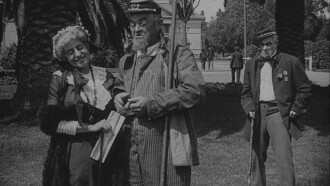
Veteran Warner and old gardener Burns vie for the hand of Widow Simpson, and the gardener steals the former's uniform and joins in the ranks of a parade, pursued by his rival.
SILAS WILSON realizes that his business is being run to the ground, and that he cannot longer compete with the newer foundries unless he makes radical changes in his methods and employees.