"Though not given a New York showing until 1935, V. I. Pudovkin's Mechanics of the Brain (Mekhanika Golovnovo Mozga) was written and directed by Pudovkin in 1926. A full year in the making, this scientific documentary concentrates on the behavioral studies conducted by Prof. Ivan Pavlov. The laboratory dogs used in Pavlov's research don't seem too happy about it, and as a result this film might be hard to take for the more sensitive viewers (the vivisection sequence is particularly rough). The progress of the research is detailed with charts and graphs, hardly the "cinematic" touches one might expect from Pudovkin. Interestingly, Mechanics of the Brains was released two years before the results of Pavlov's studies were printed in book form."
Watch the official Mechanics of the Brain 1926 trailer in HD below.
Of the Seven Wonders of the Ancient World, the Pyramid is the only one to survive. Many believe that even with our 21st-century technology, we could not build anything like it today.
Trees talk, know family ties and care for their young? Is this too fantastic to be true? German forester Peter Wohlleben and scientist Suzanne Simard have been observing and investigating the communication between trees over decades.
The Hobbit Enigma examines one of the greatest controversies in science today: what did scientists find when they uncovered the tiny, human-like skeleton of a strange creature, known to many as the Hobbit, on the Indonesian island of Flores in 2003?
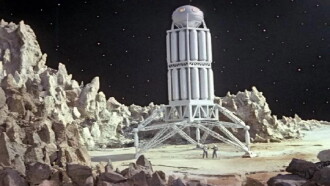
This film consists of three parts. The first dramatizes the life of the founder of Soviet astronautics, Konstantin Tsiolkovsky; the second describes the development of rocket technology; and the third visualizes the future with enactments of the first manned spaceflight, spacewalk, space station construction and humans on the moon.
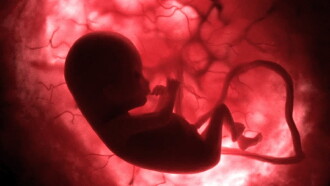
With cinematic storytelling, a moving musical score, computer animation, and 4D ultrasound images, this documentary accompanies a new human life from conception to birth, poetically describing developmental milestones and the human experience of living in a womb.
Let There Be Light follows the story of dedicated scientists working to build a small sun on Earth, which would unleash perpetual, cheap, clean energy for mankind.
As society tackles the problem of feeding our expanding population safely and sustainably, a schism has arisen between scientists and consumers, motivated by fear and distrust.
In 1962, spurred by the Cold War, President John F. Kennedy famously made the bold proclamation that NASA would send astronauts to the moon by the end of the decade, not because it was easy, but because it was a challenge.
Alternative movies trailers for Mechanics of the Brain
More movie trailers, teasers, and clips from Mechanics of the Brain:
Mechanics of the Brain 1926 Directed by Vsevolod Pudovkin
Directed by Vsevolod Pudovkin Cinematography Anatoli Golovnya Production company Mezhrabpom-Rus Release date 20 November 1926.
Popular movie trailers from 1926
These some of the most viewed trailers for movies released in 1926:
Dennis Terhune, ranch foreman for John Morgan, an eastern capitalist, discovers that there is oil on Morgan's ranch shortly after Morgan has deeded the ranch to Daley, western manager for the Morgan properties.
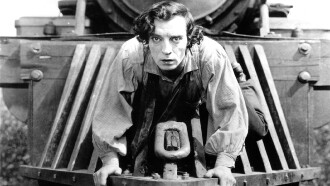
During America’s Civil War, Union spies steal engineer Johnny Gray's beloved locomotive, 'The General'—with Johnnie's lady love aboard an attached boxcar—and he single-handedly must do all in his power to both get The General back and to rescue Annabelle.
The travails of a third-rate traveling theatre company and its wardrobe lady / maid who dreams of stepping in as their melodramatic production's (Flaming Women) female lead.
Peter Verdy falls in love with Lola (Ossi Oswalda) who is mistaken for a boy when she appears in stage regalia before a rich uncle who has other marriage plans for his nephew.
Three girls from a small town win a trip to Monte Carlo. The trip was sponsored by their local newspaper, which sends along its ace reporter Bancroft as their "chaperone".
Frequently cited as one of the first war films to feature the female angle, “Corporate Kate” is the story of a pair of Brooklyn manicurists who go to France during WWI to entertain the troops with a song-and-dance act.