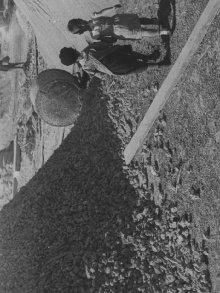
Working with children led Barskaya to create superb direct sound and an inspired style of shooting. Don’t look for conventional cinematic syntax here. The film is chaotic in the way that Soviet films still knew how to be, and Langlois couldn’t help but be seduced by its rebellious spirit, its anarchy and love of children, comparable to Vigo’s Zero de conduite.
As well as being a film made with and for children, it offers a complex take on Western society. Pre-Nazi Germany is not named as such but is carefully reconstructed, possibly under advice from Karl Radek, and children offer a playful reflection of class struggle – doubly excluded, as proletarians and as minors. “They play in the same way that they live”, one intertitle says. The interaction between their comical games and the yet more ludicrous ones played by adults is developed on several levels.
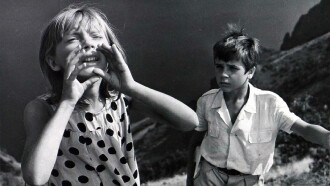
In the summer of 1976, a shared family yard becomes the setting, as the adults bicker over selling the garden and the kids are free to explore the mysterious neighboring lot.
After her father’s sudden death, Feride takes on the role of the father in the family. Her mother, Nurcan, desperately tries to replace her lost husband with Feride, while her brother, İlker, starts to drift away from the family.
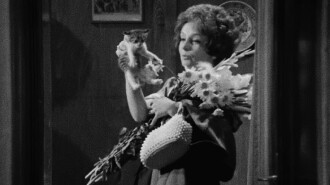
A British spy is banished to Panama after having an affair with an ambassador's mistress. Once there he makes connection with a local tailor with a nefarious past and connections to all of the top political and gangster figures in Panama.
When a homeless young musician moves into a sailboat with a feisty elderly widow, the two must overcome their differences and haunting pasts to unlock each other's dreams.
Separate We Come, Separate We Go is the story of a 10-year-old girl, Thea who escapes her bleak domestic life to find sanctuary in the surreal desert landscape of Dungeness.
Self-made businessman Sir Grant Rayburn is obsessed with making money to the exclusion of all else. He shows little interest in his daughter Jill and is irritated when she falls in love with, and wishes to marry, a young man named Tom.
The first film adaptation, and most faithful, of Noel Coward's 1929 operetta Bitter Sweet. This tells the story of Sarah Linden's romance, the tale begins with Sarah, now older, reminiscing about her first love.
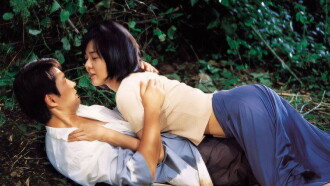
To win the heart of a rather simple minded young man who doesn't seem to care much for women, a young foreign lady takes a job as the chambermaid to the man's sister in law.
Medical student Antti Ahonen, who is fighting tuberculosis, finds himself in the middle of a love triangle with his friend Heikki Huhtamäki and his crush Helmi Hirvinen.