


Most Popular Anna Chekulaeva Trailers
Total trailers found: 11
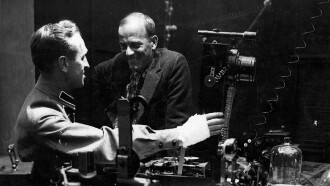
The Death Ray Trailer (1925)
16 March 1925
In a capitalist country, workers are heavily repressed but manage to get a Death Ray to fight back. Partially lost movie.
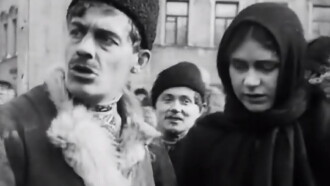
Sickle and Hammer Trailer (1921)
01 January 1921
A down on his luck peasant goes to fight in World War I and returns home a hero. Partially lost.

The Last Grudge Trailer (1930)
30 December 1930
Educational film on why corporal punishment is unacceptable in children's upbringing and is a relic of the past.
Ladies Trailer (1954)
01 January 1954
Student work, artistic director Sergei Gerasimov. A post as a clerk is promised to the impoverished teacher Vremensky, who has lost his job.

A Simple Case Trailer (1930)
31 December 1930
As a response to criticism for the allegedly excessive “mass appeal” of his earlier epic STORM OVER ASIA (1928), Vsevolod Pudovkin unleashed his flair for experimentation in what was supposed to be the director’s first sound feature.

Your Friend Trailer (1927)
24 October 1927
Khokhlova, a girl-reporter on a Moscow newpaper, falls in love with factory manager Petrovsky. To her he's the epitome of manliness--virile, decisive, strong-minded.
The Great Count Trailer (1938)
09 January 1938
A feature film that depicts scenes from the census of Imperial Russia in 1882 and the upcoming census of the Soviet Union as of January 17, 1939.
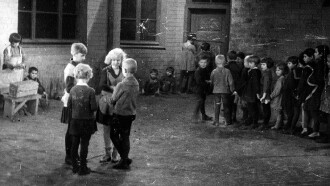
Torn Boots Trailer (1933)
17 December 1933
Working with children led Barskaya to create superb direct sound and an inspired style of shooting. Don’t look for conventional cinematic syntax here.

Loss of Feeling Trailer (1935)
17 April 1935
In an unnamed English-speaking capitalist land, a young engineer invents inexhaustible giant robots to replace the fragile human workers on high-volume assembly-lines, and soon finds his invention co-opted by the military-industrial complex.
Karl Brunner Trailer (1936)
13 October 1936
The brave son of a woman inthe political underground tries to save her from Nazi stormtroopers.
In the Days of Struggle Trailer (1920)
01 June 1920
An agit-film about the struggle of Ukrainian peasants against the White Poles. A young woman, the daughter of a blacksmith taken prisoner by the White Poles, and a Red commander organise a partisan unit.
