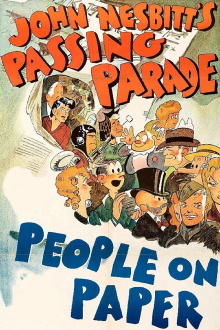
Americans are preoccupied with the news, but need an escape from many of the events reported in the news. These escapes in the past have included dime store novels. The most accessible of these escapes is what are known as the funny papers, the set of serialized comic strips that are included within many newspapers. They appeal to all socio-economic classes, and all ages. Some of the earliest known from the late 19th century include the Yellow Kid, Little Nemo, Happy Hooligan, the Katzenjammer Kids, Mutt & Jeff, and Bringing Up Father. Many cartoonists are seen in action. Some originated their characters, while others have taken over following the passing of the originator. The joy of many comic strips are the absurd and the fantastical, which are limited only by the imagination of the cartoonist. Others are grounded in reality, which add to their poignancy within the public mindset.
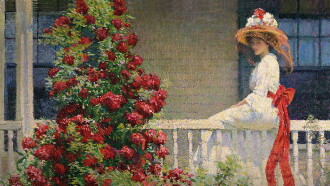
Taking its lead from French artists like Renoir and Monet, the American impressionist movement followed its own path which over a forty-year period reveals as much about America as a nation as it does about its art as a creative power-house.
One of the best-known Chinese figurative painters, Liu Xiaodong goes back to his hometown of Jincheng, in the province of Liaoning (North-East China), to re-paint again friends and relatives after several years have gone by.
Buenos Aires is a complex, chaotic city. It has European style and a Latin American heart. It has oscillated between dictatorship and democracy for over a century, and its citizens have faced brutal oppression and economic disaster.
"Meat Joy is an erotic rite — excessive, indulgent, a celebration of flesh as material: raw fish, chicken, sausages, wet paint, transparent plastic, ropes, brushes, paper scrap.
Popular movie trailers from 1945
These some of the most viewed trailers for movies released in 1945:
The two drivers Giovanni and Gaetano are friends. Gaetano, bold and ruthless, thrives in the black market, while Giovanni, who is a naive and fundamentally honest worker from the North of Italy, cannot get any profit and his wife, an energetic and talkative Roman woman, can't help blaming him for his poor business skills.
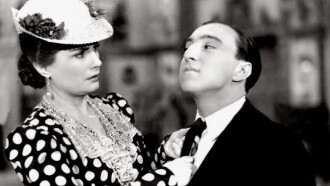
Fearing that her niece Rosita will abandon her true love and enter into a marriage of convenience, doña Juanita tells her the story of when, many years ago, she fell in love with an accountant who worked in a circus.