Most Popular John Nesbitt Trailers
Total trailers found: 85
28 October 1944
In this John Nesbitt's Passing Parade short, a man recovers his lost memories when he is forced to relive events in his dreams.
22 June 1940
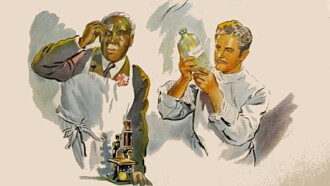
This Passing Parade entry tells the story of Dr. Joseph Goldberger (1874-1929), a Hungarian immigrant who devoted his life to finding the cause of pellagra, a disease that killed hundreds of thousands in the southern United States.
09 May 1942
This short looks at the illness anthropophobia, the fear of people. In 1901, young Catherine Starr, who lives in a small English coastal town, has an argument with her fiancé.
15 November 1941
This MGM Passing Parade series short tells the story of Julian Poydras, whose encounter with a girl at Mardi Gras had a profound effect on his later life.
19 February 1938
This MGM An Historical Mystery short traces the final voyage of the Mary Celeste, a ship discovered at sea, in December 1872, devoid - for no discernible reason - of crew, passengers and captain.
27 August 1949
This final John Nesbitt's Passing Parade series short looks at a community, Mooseheart, in Illinois that orphaned children call home.
30 April 1938
That Mothers Might Live is a 1938 American short drama film directed by Fred Zinnemann. The short is a brief account of Hungarian physician Ignaz Semmelweis and his discovery of the need for cleanliness in 19th-century maternity wards, thereby significantly decreasing maternal mortality, and of his struggle to gain acceptance of his idea.
30 October 1943
A Yugoslav man, dying after being shot while attempting to help defend his village, writes a letter of encouragement and hope to his unborn child, explaining what he was fighting for in resisting the Nazi invasion of his homeland.
17 November 1945
Americans are preoccupied with the news, but need an escape from many of the events reported in the news.
22 July 1939
This John Nesbitt's Passing Parade short tells the story of John Peter Zenger, who in Colonial New York was tried for sedition based on what he printed in his newspaper.
01 January 1942
The Devil works with Adolf Hitler to cause inflation in the United States.
08 August 1942
Following Japan's attack on Pearl Harbor, America was rife with rumors about the size of Japan's armed forces and how well-equipped they were to wage war against the U.
29 January 1949
In this John Nesbitt's Passing Parade series short, narrator John Nesbitt tells the story of Scandinavian immigrant Annie Swenson, who worked as cook and housekeeper in his family's home while he was growing up.
11 April 1949
This MGM Passing Parade series short presents how separate events led to the creation of three provisions - freedom of speech, freedom of the press, and prohibition of the infliction of cruel and unusual punishments - in the U.
18 March 1939
This short focuses on the story of Dr. Edward Jenner, who developed vaccination.
20 April 1940
Shows how important luck can be in a person's life.
24 October 1942
This Passing Parade series entry looks at three instances of people who either caused or were the victims of errors.
26 August 1939
The "unseen guardians" of the title are the Postal Inspection Service, which investigates mail order racketeering; the Underwriters' Laboratories, which are shown testing electrical equipment, fire extinguishers, and large floor safes; and those who run orphanages, who assure that the children in their care are placed in proper adoptive homes.
11 January 1947
A policeman's son searches for a suitable subject for an essay about an important person.
31 October 1942
In this John Nesbitt's Passing Parade short, a look is taken at the problems of film preservation efforts in the 1930s and early 1940s.
24 January 1948
Narrator John Nesbitt laments the disappearance of the rural one-room schoolhouse in America. He reminisces about his own days as a student in such a school and how his teacher, Miss Turlock, influenced so many students.
01 January 1945
Frank Morgan is hired to put together a movie using odds and ends from the MGM vaults. He does so by splicing together a string of completely unrelated short subjects and musical numbers, interspersed with a repeated loop of a scene from some melodrama.
30 November 1940
This MGM John Nesbitt's Passing Parade series short takes a look at the origins of North American slang.
29 March 1941
This John Nesbitt's Passing Parade short tells of the Nazis' efforts to shut down an underground resistance newspaper in occupied Belgium.
19 August 1939
This short film presents the story of Dr. Ephraim McDowell, who came under scrutiny for his pioneering of surgical practices.
06 October 1945
This John Nesbitt's Passing Parade short takes a look at the typical American barbershop throughout the years.
19 March 1938
This dramatized short film describes the historical mystery of France's "man in the iron mask". King Louis XIV imprisoned a man who was never identified, but who was forced to wear an iron mask for the length of his captivity, which ended only in his death.
19 June 1948
This MGM John Nesbitt's Passing Parade series short tells the story of how a Mauser pistol used on the battlefield by Germans during WWII makes its way into the hands of an American gangster.
11 June 1946
In this John Nesbitt's Passing Parade short, a man traces his history by the succession of cars his father owned.
21 November 1938
The story of Boys Town, founded by Father Edward Flanagan in 1917 as a haven for wayward, homeless, and neglected boys.
28 November 1942
This Passing Parade series short chronicles the political life of Francisco Madero, who tried to bring democracy and land reform to Mexico.
28 August 1948
In this John Nesbitt's Passing Parade short, we learn the story of Dr. Franz Anton Mesmer, the man who discovered hypnotism.
07 May 1949
Historical short showing how Eli Whitney (best known for the invention of the cotton gin) played a significant role in the introduction of mass production techniques to the USA in the late 18th century.
25 March 1944
This patriotic short film promotes America's war effort at home. The story looks at a fictional small town's main street, seeing where additional workforce, for increased production of materials needed by the military, might come from.
18 February 1939
This John Nesbitt's Passing Parade short tells the story of Alfred Nobel, who invented dynamite, and later established the Nobel Prize.
06 September 1951
Sunny-sweet the prune shows us how prunes are made from certain kinds of plums, why they're so good for you, and, in live action, some recipes made with prunes.
17 June 1939
Made just before America would be forced into the Second World War, this short subject is a brief dramatized history of American democracy.
31 January 1942
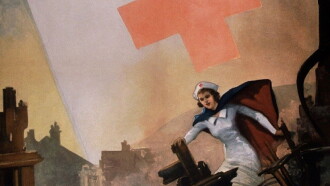
The 1939 dramatic short "Angel of Mercy," about Red Cross founder Clara Barton, is reedited to relate the story to America's involvement in World War II.
20 May 1938
An American art collector, living in France in the 1870s, who loses his fortune in a stock market crash devises a scheme to get back his wealth through insurance fraud with the added consequence of potentially killing hundreds of people.
17 May 1941
John Nesbitt's "Passing Parade" purports to show how the behavior of mice can be studied in relation to the interaction of school children.
31 May 1941
In this somewhat whitewashed documentary on Manhattan's Bowery a newcomer to the area takes his first step toward redemption after a meal, bed, and inspiring talk.
20 May 1939
This MGM Passing Parade series short tells the story of Clara Barton, the founder of the Red Cross.
30 August 1947
This John Nesbitt's Passing Parade short takes a look at the gentlemanly life and masterful counterfeiting exploits of Everett Nordill, one of the cleverest counterfeiters who ever baffled the agents of the U.
24 July 1943
This John Nesbitt's Passing Parade series short highlights the film preservation efforts of the Museum of Modern Art in New York.
11 November 1944
The saga of the Normandie is recounted from her life as a luxury liner, the horrific fire that nearly destroyed her, and her resuscitation to join in the war effort.
13 July 1940
Part of John Nesbitt's Passing Parade series, this short shows how three seemingly unimportant things can affect people.
10 October 1942
This MGM John Nesbitt's Passing Parade series short dramatizes how the work of Dutch physician Christiaan Eijkman, who searched for a cure for beri-beri on the island of Java in the 1890s, led to the discovery of vitamins.
07 February 1948
Narrator John Nesbitt reminisces about his hometown and childhood in this Passing Parade series short.
30 December 1938
Young lovers Jack and Sally are from families that compete to send horses to the 1938 Kentucky Derby, but during the Civil War, her family sided with the South while his sided with the North--and her Uncle Peter will have nothing to do with Jack's family.
05 May 1945
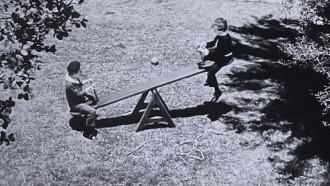
This short shows how two objects led to important discoveries. Children playing with a seesaw inspire French physician Rene Laennec to invent the stethoscope, and a pair of shoes made of caoutchouc lead Charles Goodyear to discover the process for vulcanizing rubber.
02 January 1943
This short film examines the origins of several superstitions including crossing your fingers, knocking on wood, rabbit's feet, and breaking champagne bottles to christen ships, plus the role of superstitions in the Flying Dutchman tale.
27 November 1943
This John Nesbitt's Passing Parade short takes a look at the evolution of the American city, from the initially small farming village, to the eventually hectic, congested metropolis, to the future planned suburban community.
12 June 1943
Young couple Joe and Mary Thompson love each other and their children despite the struggles that they have that are typical of most young couples early on in their married life, such as the basics of trying to make ends meet.
12 July 1941
This short looks at the odd bequests that people have made in their wills over the years. They include a woman who left her fortune to her pet cat and a murderer who ensured that his corneas would be donated to a blind girl after he was put to death in the electric chair.
23 October 1943
A look at how the weather bureau tries to warn farmers and businessmen about approaching large storms.
15 November 1945
This entry in John Nesbitt's "Passing Parade" series is about the great moments in the lives of famous men who found found an answer or made a great discovery in the flash of a golden hunch.
10 December 1945
A film recreating a broadcast of the Westinghouse Radio Program starring John Charles Thomas and John Nesbitt.
19 January 1946
This MGM Passing Parade series short recounts how English chemist John Walker invented the wooden friction match during the 1820s.
15 October 1938
Three specific and separate stories of life's passing parade are presented.
15 July 1944
This MGM Passing Parade series short takes a look at changing definitions of art in the United States.