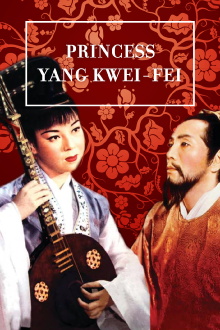
In 8th-century China, the Emperor grieves the death of his wife. The Yang family wants to provide the Emperor with a consort so that they may consolidate their court influence. General An Lushan finds a distant relative working in their kitchen, whom they groom to present to the Emperor. The Emperor falls in love and she becomes the Princess Yang Kwei-fei. The Yangs are then appointed important ministers, though An Lushan is not given the court position he covets.
The story of the ascension to the throne and the early reign of Queen Elizabeth the First, the endless attempts by her council to marry her off, the Catholic hatred of her and her romance with Lord Robert Dudley.
A sumptuous and sensual tale of intrigue, romance and betrayal set against the backdrop of a defining moment in European history: two beautiful sisters, Anne and Mary Boleyn, driven by their family's blind ambition, compete for the love of the handsome and passionate King Henry VIII.
In 9th century China, a corrupt government wages war against a rebel army called the Flying Daggers. A romantic warrior breaks a beautiful rebel out of prison to help her rejoin her fellows, but things are not what they seem.
When Queen Elizabeth's reign is threatened by ruthless familial betrayal and Spain's invading army, she and her shrewd adviser must act to safeguard the lives of her people.
Paris, Kingdom of France, August 18, 1572. To avoid the outbreak of a religious war, the Catholic princess Marguerite de Valois, sister of the feeble King Charles IX, marries the Huguenot King Henry III of Navarre.
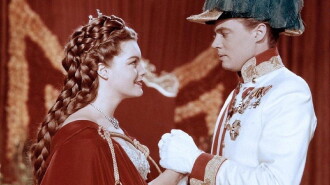
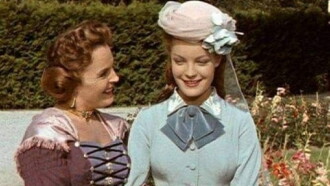
The young Bavarian princess Elisabeth, who all call Sissi, goes with her mother and older sister Néné to Austria where Néné will be wed to an emperor named Franz Joseph, Yet unexpectedly Franz runs into Sissi while out fishing and they fall in love.
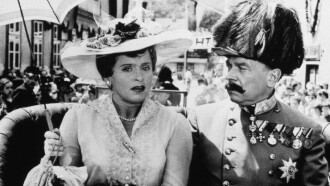
Sissi is now the empress of Austria and attempts to learn etiquette. While she is busy being empress she also has to deal with her difficult new mother-in-law, while the arch-duchess Sophie is trying to tell the emperor how to rule and also Sissi how to be a mother.
Alternative movies trailers for Princess Yang Kwei-fei
More movie trailers, teasers, and clips from Princess Yang Kwei-fei:
고전영화 : 양귀비 (Yokihi aka Princess Yang Kwei fei 1955)
Princess Yang Kwei-fei full hd movie trailer.
Popular movie trailers from 1955
These some of the most viewed trailers for movies released in 1955:
Having helped his brother King Edward IV take the throne of England, the jealous hunchback Richard, Duke of Gloucester, plots to seize power for himself.
Krestan Serbin, a 64-year-old Sorbian farm-worker, considers himself non-political. He owns a few acres, a few pigs and a cow, and intends to pass all this on to his daughter Lena.
A man embezzles some money in order to pay his debts and the daughter of his boss, who is in love with his son, asks a rich former suitor of hers for help.
A story about the passengers of the inland waterway Heinävesi. Salli, the daughter of the captain, dreams of an acting career and joins a performance by a theater company traveling on a ship.
Murders, with victims dying from spines broken by brute strength, erupt in the city and the killers, when encountered, walk away unharmed by police bullets which strike them.