Dai Arakawa Trailers
In the Realm of the Senses TrailerUnder the Blossoming Cherry Trees TrailerSilence Trailer


In the Realm of the Senses TrailerUnder the Blossoming Cherry Trees TrailerSilence Trailer

Total trailers found: 10

15 September 1976
A passionate telling of the story of Sada Abe, a woman whose affair with her master led to an obsessive and ultimately destructive sexual relationship.

06 January 1965
Taking its title from an archaic Japanese word meaning "ghost story," this anthology adapts four folk tales.

13 November 1971
In 17th-century Japan, two Portuguese Jesuit priests seek their mentor, who is rumoured to have committed apostasy, and to propagate Catholicism.

24 May 1969
Successful and married with children, paper-mill owner Jihei knows better than to contradict the strict social and moral codes of 18th-century Japan.

03 May 1955
In 8th-century China, the Emperor grieves the death of his wife. The Yang family wants to provide the Emperor with a consort so that they may consolidate their court influence.

08 December 1941
In the early 18th-century, Lord Takumi-no-kami Asano, feuding with Lord Kira, tries to kill his opponent in the corridors of the Shogun's palace.

01 April 1953
Ginko, a poor cobbler's daughter, becomes a geisha to support her family. She passes from one geisha house to the next, trying to find love and hope in the process.
31 May 1975
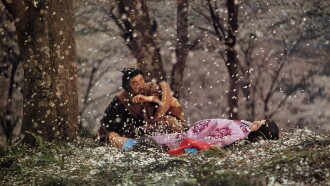
A mountain bandit abducts a woman who demands he kill his other wives to please her, leading to a cycle of violence and madness fueled by superstition and obsession.

02 July 1966
Seeking revenge against the guard who tormented him, a young man returns to the island where he was imprisoned in reform school.

11 September 1971
In feudal Japan, when any commerce with the rest of the world is strictly prohibited, an idealist appears at an isolated inn, headquarters of smugglers with stolen money intended to ransom his loved one forced to work in a brothel.
