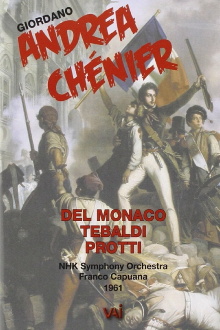
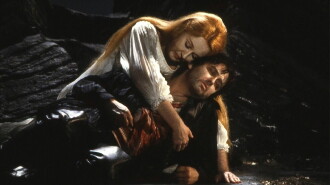
Renowned tenor Mario Del Monaco sings the lead in this production of Umberto Giordano's opera based on the life of French poet Andrea Chénier. With his unique vocal technique, Del Monaco brings a vibrant power to the title role, matched by complex and charismatic performances from Antonietta Stella as Chénier's beloved Maddalena and Giuseppe Taddei as the tragic Gérard in this sweeping tale set against the backdrop of the French Revolution.
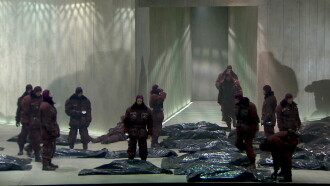
At first glance, the title of Shostakovich’s opera seems to speak for itself: Katherina, neglected and unhappy in her marriage, commits the most heinous crime just like the Shakespearian Lady Macbeth.
Between two Thanksgivings, Hannah's husband falls in love with her sister Lee, while her hypochondriac ex-husband rekindles his relationship with her sister Holly.
Rarely has a production of Verdi’s Otello been staged in such a prestigious location: the courtyard of the Palazzo Ducale in Venice! This special outdoor “event production” of the Teatro La Fenice takes place amidst genuine late-Gothic and Renaissance architecture highlighted by spectacular projections: “A set of singular fascination” (Il Corriere Musicale).
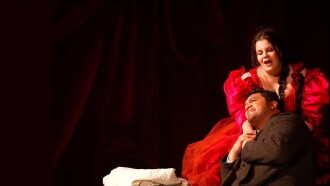
Carlos Álvarez takes the title role in the first of Verdi's Shakespearean operas, with Maria Guleghina as the manipulative wife whose desire to gain the Scottish throne drives her husband to murder and leaves both with blood on their hands.
Johann Strauss, Jr., a would-be composer of waltzes in mid-19th Century Vienna, attempts to thwart his father's efforts to prevent his success when the older man becomes jealous of his melodic skill.
2014 marks a year of celebration recognizing the 150th birthday year of the German late-Romantic orchestral, operatic and lied master composer, Richard Strauss (1864-1949).
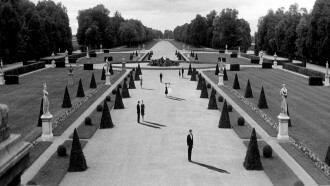
At a weekend gathering, a man tells a woman that they had spent time there together a year prior. But, the woman has no recollection whatsoever and is convinced that he is simply fabricating the encounter.
It's a crisp autumn morning. Marta prepares breakfast and goes to work. Little Jenda has a sore throat, so she has to go to her grandfather's to look after the boy.
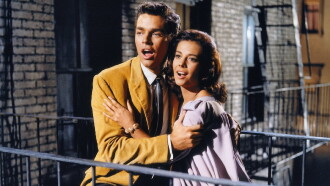
In Manhattan’s Upper West Side, rival gangs of Polish-Americans and newly arrived Puerto Ricans clash for control of the neighborhood, even as two young members from opposite sides fall dangerously in love.
Two identical twin sisters, separated at birth by their parents' divorce, are reunited years later at a summer camp, where they scheme to bring their parents back together.
After years of drifting around, Willi Palko arrives in the lignite mining area. He was not only looking for a new job, but also wanted to finally settle down here.