A drama consisting of two parts: In 't Water and De Boer Die Sterft. The first part tells the story of Jan Boele, who is forced to marry Tale Siepers, a girl who is pregnant with his child. However, Jan is in love with Poezeke, the daughter of a wealthy farmer, and dreads his marriage. On their wedding day, he refuses to get up when the bride arrives, leading to a tragic ending. The second part follows Nand, a Flemish farmer who, on his deathbed, looks back on his life, which consisted mainly of working and eating according to the rhythm of the seasons. He remembers his childhood, his wife Wanne, and his mother, and realizes that his life was not as empty as he thought.
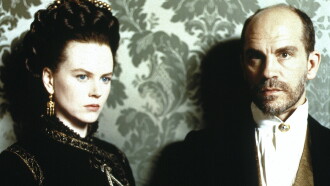
Ms. Isabel Archer isn't afraid to challenge societal norms. Impressed by her free spirit, her kindhearted cousin writes her into his fatally ill father's will.
A young heroin addict roams the streets of New York to panhandle and get her next fix, while her unstable boyfriend drifts in and out of her life at random.
A historical drama that illustrates Russian author Leo Tolstoy's struggle to balance fame and wealth with his commitment to a life devoid of material things.
A writer meets five widows on a train to Puri. As the six lives begin to intertwine, the theme of the taboos of widowhood emerge; but so, too, does a philosophy of life and hope for the future.
In January 1810 in Edo, Kikunosuke, the 17-year-old-son of a murdered samurai, takes revenge on his father's murderer, Sakubai, who was his father's former retainer.
Two boys – the prince Edward and the pauper Tom – are born on the same day. Years later, when young teenage Tom sneaks into the palace garden, he meets the prince.
If a girl has such an uninteresting occupation that she sells flowers, she likes to indulge in daydreaming, where she can experience unsuspected adventures.
The Nazis, exasperated at the number of escapes from their prison camps by a relatively small number of Allied prisoners, relocate them to a high-security 'escape-proof' camp to sit out the remainder of the war.