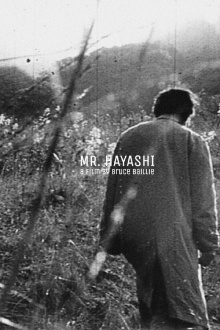
Bruce Baillie's Mr. Hayashi might be thought of as a putative East Coast story transformed by a West Coast sensibility. The narrative, slight as it is, mounts a social critique of sorts, involving the difficulty the title character, a Japanese gardener, has finding work that pays adequately. But the beauty of Baillie's black-and-white photography, the misty lusciousness of the landscapes he chooses to photograph, and the powerful silence of Mr. Hayashi's figure within them make the viewer forget all about economics and ethnicity. The shots remind us of Sung scrolls of fields and mountain peaks, where the human figure is dwarfed in the middle distance. Rather than a study of unemployment, the film becomes a study of nested layers of stillness and serenity.
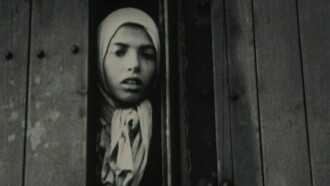
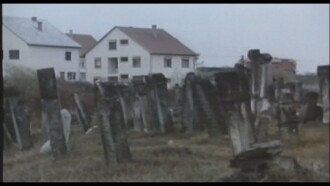
Two rabbis show the ruins of an abandoned synagogue to a group of primary school-age Jewish children, and stand by as the children dip bread in honey, drink wine, pray, and sing.
On the island of La Gomera, children imagine stories while they examine archeological remains. An ethno-fictional journey in which past and present coalesce, creating resonances between the volcanic landscape and Silbo, the whistled language of the island.
World wars pick their victims not only from those serving on the front line, women and mothers who have lost husbands and sons in battle also become victims.
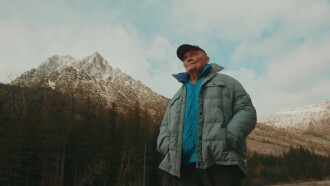
A 94-year-old Glacier National Park ranger confronts the decline of the park he calls home as he reflects on his life and the legacy he will leave behind.
Based on Eimear Ryan’s essay ‘The Fear of Winning’, three successful female athletes explore how being physically courageous, unapologetically competitive and deeply passionate in team sport can unlock a freedom to really occupy your own skin.
This was a sponsored documentary film by director Kazuo Kuroki of Japan. This highly artistic film focused entirely on Japanese marathon runner Kenji Kimihara.
A woman is tormented by dreams that she is the reincarnation of a dead countess. Her father, trying to get her to stop the dreams, takes her to a village near the castle of the late countess.
Sonny Chiba's first martial arts film, a partially fictionalized judo biopic based on prominent judoka Shiro Saigo (Chiba), the second student of judo founder Jigoro Kano (Naoki Sugiura).