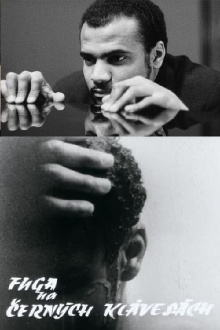
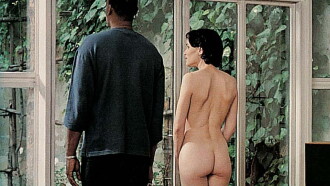
Fati Farari, a black man from Africa, is completing his studies in classical piano at the Music Academy of Prague. It's the day before his first solo concert, where he is going to play Bach. While he strolls around the city he is thinking, not so much about the concert as about himself, both as a lonely foreigner and as a human being in cosmos. Here and there he encounters some racist comments, but mostly he just feels the weight of social exclusion because of his otherness, especially when it comes to women. On the morning of the day for his concert the embassy informs him that his whole family has perished. He feels totally broken, although he thinks that everyone holds some pain inside. His piano teacher, a professor at the Academy, looks him up, and tells him that he heard what has happened. The professor advises him to communicate his feelings that evening by using his Bach.
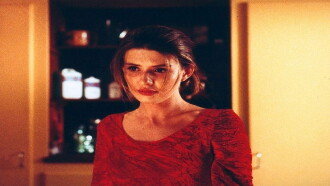
Marie, who works as a successful door-to-door encyclopedia salesperson, has been married to her husband Francois for 12 years and has a two-year-old son.
On the outskirts of Brooklyn, Frankie, an aimless teenager, suffocates under the oppressive glare cast by his family and a toxic group of delinquent friends.
After a disfiguring leg injury, a young woman develops an unsettling secret relationship with her own body in which pain is pleasure, mutilation is love and hungers of the flesh have a mind of their own.
The episodically connected lives of four college friends unfold throughout the incipient martial law years, as they struggle to define their sexual and professional desires and how best to attain them.
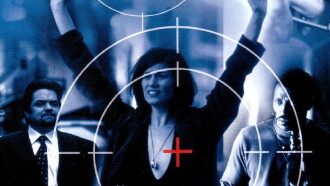
As the heir and current marketing director for one of the nation's biggest gun manufacturers, Liberty Wallace is indifferent to the atrocities made possible through her business and her CEO husband, Victor.
CBS bit on Piero Heliczer shooting his film 'Venus in Furs' (they mistakenly call it 'Dirt'). Released by Boo-Hooray as part of their exhibit on Heliczer and The Dead Language Press.
High school students experience the everyday worries of their age - they prepare for their high school graduation, go on a production internship at an engineering plant, and compete for a ski trip to the Krkonoše Mountains.
Tin Tan sets off for adventure on the isle of Puerto Rico. This musical comedy takes place in the International Airport of Puerto Rico during a day of carnival.
Germany in May 1945: the war is over, men are returning home and a new life begins in the villages. After 12 years in a concentration camp, the "Red Shoemaker" also returns to his home village.
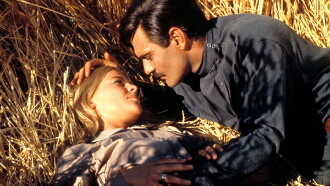
The life of a Russian physician and poet who, although married to another, falls in love with a political activist's wife and experiences hardship during World War I and then the October Revolution.
Laura Eden is one of the world's most beautiful pinup photographers. She is given the difficult assignment to bring together and photograph all of the most beautiful nude models in New York City.