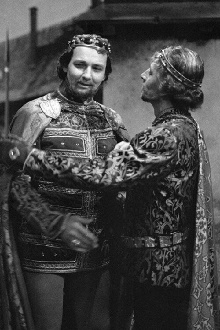
A little-known adaptation of Jaroslav Vrchlický's play is returning to the television screen, full of humorous plots, telling the story of the courage of two women in love who, because of their love, infiltrated Karlštejn Castle, where women are forbidden to enter by order of the monarch. It was created with a number of star actors eight years before the now legendary film adaptation by Zdeněk Podskalský. When it premiered in 1965, it aroused a stormy, positive and negative response. Quite naturally, because Filip's concept of this classic play, albeit in the authentic setting of Karlštejn Castle, was completely new and unconventional at the time. This adaptation of the classic original uses the melodies of popular Czech and foreign hits with lyrics by P. Kopta. For example, the ruler's arrival at the castle was announced by the melody of the popular song Jó, třešné zrály. However, professional singers mostly sing for the actors here.
Australian good girl Sandy and greaser Danny fell in love over the summer. But when they unexpectedly discover they're now in the same high school, will they be able to rekindle their romance despite their eccentric friends?
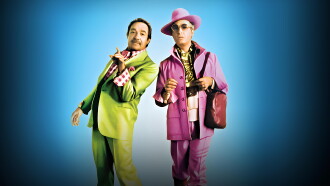
A conniving Broadway producer and his meek accountant plan to profit from charming wealthy old biddies to invest in an overbudget production, and then put on a sure-fire disaster, so nobody will ask for their money back — and what's more disastrous than a tasteless musical celebrating Adolf Hitler.
Set in modern upper-crust Manhattan, an exploration of love and commitment as seen through the eyes of a charming perpetual bachelor questioning his single state and his enthusiastically married, slightly envious friends.
Comedy in five acts by Beaumarchais, filmed by Marcel Bluwal in studio and on location. The cast, in accordance with Marcel Bluwal's wishes, is in keeping with the age and character of the characters, to give it rhythm.
Kidnapped and rescued by a Ninja, Fujimaru has mastered martial arts over the years. Now he sets off on a journey to find his mother and also locate an old tome containing secret martial arts techniques.
High school students experience the everyday worries of their age - they prepare for their high school graduation, go on a production internship at an engineering plant, and compete for a ski trip to the Krkonoše Mountains.
Germany in May 1945: the war is over, men are returning home and a new life begins in the villages. After 12 years in a concentration camp, the "Red Shoemaker" also returns to his home village.