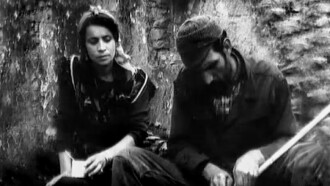
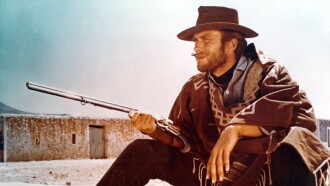
Historical film in four scenes which retrace the returns, the progress and the outcome of the war of liberation in Algeria. The first painting, “The land was thirsty” describes aspects of injustice and colonial oppression. The second “The Paths to the Prison” recounts the sufferings of the people engaged in combat. The last two are the stories of two lives.
Film describes the miserable existence of a charcoal-burner who is barely able to feed his family. His search for work in town ends in failure and he is forced to return to his village.
Life in the African country of Mali in the 1990s is vividly highlighted in this mild drama. In the story, a young forest ranger who sees that his work holds the key to the future of his country (through reforestation) is disgusted at the short-sighted, money-grubbing ways of his superiors.
A sorcerer (played by the director himself) controls all activities in a village. Manipulating the different parties, the sorcerer promises love, good health and riches in exchange for the most extravagant rewards.
Based on a traditional African tale. A king has the habit whilst walking in disguise on the streets of his kingdom to listen to the wishes of his own people.
An aging village chief entrenched in traditional Cameroonian ways clashes with his daughter. She was educated in France to help support the family, but has taken on the trappings of Western Europeans.
In 1958 in Paris, during the Algerian War, a young trainee lawyer, Maître Chabrier, was assigned to defend an Algerian garbage collector against paratroopers who had beaten him.
Popular movie trailers from 1965
These some of the most viewed trailers for movies released in 1965:
Post-adolescent romance; the dude and the chick both tried to impress each other by pretending to come from rich families, and eventually they'll both have to fess up.
CBS bit on Piero Heliczer shooting his film 'Venus in Furs' (they mistakenly call it 'Dirt'). Released by Boo-Hooray as part of their exhibit on Heliczer and The Dead Language Press.
Germany in May 1945: the war is over, men are returning home and a new life begins in the villages. After 12 years in a concentration camp, the "Red Shoemaker" also returns to his home village.