"The Paradise at Five Dollars"02 February 1968Factual92 mins
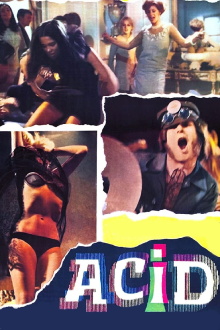
The film, set almost entirely in New York, tells of the life of some young people of the late Sixties: of the use they make of various drugs, including the terrible LSD, of their sex life and their freedom of costume and thought.
This is not merely another film about cinema history; it is a film about the love of cinema, a journey of discovery through over a century of German film history.
A look at the first years of Pixar Animation Studios - from the success of "Toy Story" and Pixar's promotion of talented people, to the building of its East Bay campus, the company's relationship with Disney, and its remarkable initial string of eight hits.
Jerry McGill slipped from a rock'n'roll career into a life of crime, robbing banks and running from the FBI while touring with legends of country music and appearing in movies.
Released two years after James Dean's death, this documentary chronicles his short life and career via black-and-white still photographs, interviews with the aunt and uncle who raised him, his paternal grandparents, a New York City cabdriver friend, the owner of his favorite Los Angeles restaurant, outtakes from East of Eden, footage of the opening night of Giant, and Dean's ironic PSA for safe driving.
The never-before-told story of the Brotherhood of Eternal Love – a spiritual group of surfers and hippies in Southern California that became the largest suppliers of psychedelic drugs in the world during the 1960s and early 1970s.
Working men and women leave through the main gate of the Lumière factory in Lyon, France. Filmed on 22 March 1895, it is often referred to as the first real motion picture ever made, although Louis Le Prince's 1888 Roundhay Garden Scene pre-dated it by seven years.
A tribute to the late, great French director Francois Truffaut, this documentary was undoubtedly named after his last movie, Vivement Dimanche!, released in 1983.
When Francois Truffaut approached Alfred Hitchcock in 1962 with the idea of having a long conversation with him about his work and publishing this in book form, he didn't imagine that more than four years would pass before Le Cinéma selon Hitchcock finally appeared in 1966.
2nd Edition of Loose Change documentary. What if...September 11th was not a surprise attack on America, but rather, a cold and calculated genocide by our own government?We were told that the twin towers were hit by commercial jetliners and subsequently brought down by jet fuel.
Through interviews with leading psychologists and scientists, Neurons to Nirvana explores the history of four powerful psychedelic substances (LSD, Psilocybin, MDMA and Ayahuasca) and their previously established medicinal potential.
Shot in 1971 during Gal Costa's famous concert "Gal Fa-tal" in Rio de Janeiro's Sucata Nightclub, Ivan Cardoso's eponymous Super-8 short film shows the singer both in and off stage, interlapsed with scenes from Cardoso's "Nosferato no Brasil".
Alternative movies trailers for Acid Delirium of the Senses
More movie trailers, teasers, and clips from Acid Delirium of the Senses:
[Action Movie] Acid Delirium of the Senses 1968
Mondo documentary about psychedelic drugs sex and hippies in the 1960s.
Acid Delirium of the Senses (1968): 0:32 - 2:43
In 1967 Tompkins Square Park the Hare Krishna Mantra is being sung where the Hare Krishna Movement began in 1966: The Lower East Side of Manhattan ...
Popular movie trailers from 1968
These some of the most viewed trailers for movies released in 1968:
A Southern soldier in the American Civil War is sent to reconnoiter the enemy positions and becomes trapped beneath a huge pile of rubble by Northern cannon fire.
Centring on the legend of the four ancient Chinese heroines, the film was a novelty for audiences at the time, as the singing performance was in Cantonese and used huangmei operatic rhythms—a popular trend in the 1960s, yet it retained traditional flavours by using operatic luogu percussion in the battle scenes.
Documentary by Juan Francisco de Lasa about a pioneer of Spanish cinema. Gelabert attended one of the first sessions of the Lumière's cinématographe in Barcelona.
The Three Kingdoms period begins as the walled fortress of Hsin Yang falls to invaders. Centered around this historical event, The Last Days of Hsin Yang follows the escape of the prince of Hsin Yang as he hides with a small family and escapes from the sacked and burning city.