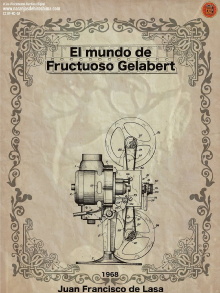
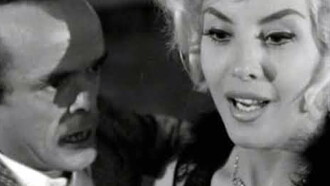
Documentary by Juan Francisco de Lasa about a pioneer of Spanish cinema. Gelabert attended one of the first sessions of the Lumière's cinématographe in Barcelona. Briefly after, he built a contraption based on this invention. He produced his first picture, "Dorotea", in 1897. His film "Riña en un café" is considered the first Spanish film to feature a plot.
Forty years after the release of Claude Lanzmann’s monumental film Shoah, Guillaume Ribot reveals the director’s relentless pursuit to tell the untold, using only Lanzmann’s words and unseen footage from the masterpiece.
The life and professional career of the Spanish filmmaker Florián Rey (1894-1962), a brilliant artist who began his career in silent films and had great commercial success during the Second Republic (1931-1936): a journey to the early days of Spanish cinema.
A short documentary about the life and death of the bullfighter Manuel Rodriguez Manolete. It recounts his career this celebrated Spanish bullfighter who was the inspiration for the ill-fated Montalvo in Pandora and The Flying Dutchman.
Material filmed during and after the battle of Amman, in September 1970. The images document the rubble after the bombings, showing displaced people in the hall of a building, among the ruins, inside schools, while they are being treated .
Telugu Film Director Vamsy, reminisces about his early days as an Assistant Director Working at "Seethakoka Chilaka" sets with his Mentor Bharathi Raja and how he made a Unique Trailer Cut for the Film.
The Three Kingdoms period begins as the walled fortress of Hsin Yang falls to invaders. Centered around this historical event, The Last Days of Hsin Yang follows the escape of the prince of Hsin Yang as he hides with a small family and escapes from the sacked and burning city.
World War II is raging, and an American general has been captured and is being held hostage in the Schloss Adler, a Bavarian castle that's nearly impossible to breach.
Centring on the legend of the four ancient Chinese heroines, the film was a novelty for audiences at the time, as the singing performance was in Cantonese and used huangmei operatic rhythms—a popular trend in the 1960s, yet it retained traditional flavours by using operatic luogu percussion in the battle scenes.
Comments
Have you watched El mundo de Fructuoso Gelabert yet? What did you think about it?