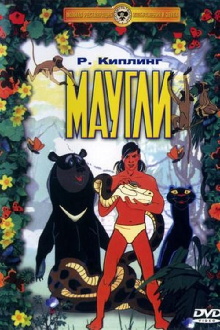
Episode 2. Mowgli — the adopted son of a wolf family. He grows quickly and learns from his mentors. The rumor that the wolf pack living human child, comes to banderlogs. The monkey tribe, decided to make Mowgli their leader. They steal Mowgli and transfer it into a towns ruins in the jungle.
The boy Mowgli makes his way to the man-village with Bagheera, the wise panther. Along the way he meets jazzy King Louie, the hypnotic snake Kaa and the lovable, happy-go-lucky bear Baloo, who teaches Mowgli "The Bare Necessities" of life and the true meaning of friendship.
A group of self-absorbed actors set out to make the most expensive war film ever. After ballooning costs force the studio to cancel the movie, the frustrated director refuses to stop shooting, leading his cast into the jungles of Southeast Asia, where they encounter real bad guys.
When Travis, the mouthy son of a criminal, disappears in the Amazon in search of a treasured artifact, his father sends in Beck, who becomes Travis's rival for the affections of Mariana, a mysterious Brazilian woman.
Though she can spin wild tales of passionate romance, novelist Joan Wilder has no life of her own. Then one day adventure comes her way in the form of a mysterious package.
When a Spanish Jesuit goes into the South American wilderness to build a mission in the hope of converting the Indians of the region, a slave hunter is converted and joins his mission.
A 'National Geographic' film crew is taken hostage by an insane hunter, who takes them along on his quest to capture the world's largest — and deadliest — snake.
An eccentric scientist in the Amazon jungle rejects his research assistant for being a woman, but as bulldozers threaten their work on a potential cancer cure, they learn to collaborate and begin to fall in love.
A baleful limping man walks through Prague. He is Asmodeus (Juraj Herz), the fiend of lustfulness, entertaining himself by putting together by magic couples of lovers.
Documentary by Juan Francisco de Lasa about a pioneer of Spanish cinema. Gelabert attended one of the first sessions of the Lumière's cinématographe in Barcelona.
Centring on the legend of the four ancient Chinese heroines, the film was a novelty for audiences at the time, as the singing performance was in Cantonese and used huangmei operatic rhythms—a popular trend in the 1960s, yet it retained traditional flavours by using operatic luogu percussion in the battle scenes.