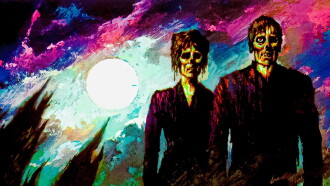
An adaptation directed by Claude Whatham for the BBC's Theatre 625 slot. Essentially a recording of John Barton's acclaimed Royal Shakespeare Company production starring Catherine Lacey (the Countess), Ian Richardson (Bertram), Lynn Farleigh (Helen), Clive Swift (Parolles) and Sebastian Shaw (the King), it was broadcast on 3 June 1968.
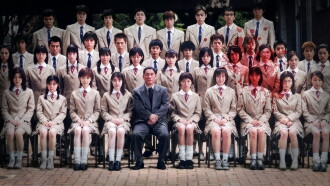
In the future, the Japanese government captures a class of ninth-grade students and forces them to kill each other under the revolutionary "Battle Royale" act.
With the help of a talking freeway billboard, a "wacky weatherman" tries to win the heart of an English newspaper reporter, who is struggling to make sense of the strange world of early-90s Los Angeles.
Slacker duo Beavis and Butt-Head wake to discover their TV has been stolen. Their search for a new one takes them on a clueless adventure across America, during which they manage to accidentally become America's most wanted.
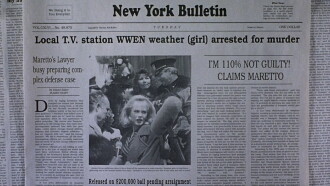
Tally Atwater has a dream: to be a prime-time network newscaster. She pursues this dream with nothing but ambition, raw talent and a homemade demo tape.
Popular movie trailers from 1968
These some of the most viewed trailers for movies released in 1968:
Three identical prints of a single 100 foot fixed-camera take are shown from beginning to end-roll light-flare, with a few feet of blackness preceding/bridging/following the rolls.
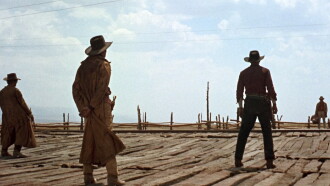
As the railroad builders advance unstoppably through the Arizona desert on their way to the sea, Jill arrives in the small town of Flagstone with the intention of starting a new life.
Anthony Steffen, as a young gunman who works as a circus performer, witnesses the killing of some outlaws, carried out by their leader and is credited with the deed.
There's nothing like a good, opulent, gaudy musical to lift the spirits, but when it's a 1960's Hong Kong musical orchestrated by a Japanese director and composer, it breaks through the ranks as a classic of campy kitsch.
"In my film I suggest that there is no greater mystery than that of the protagonists. War and Love are simply equated for what they are; the aftermath is inevitable, and a normal human condition, for which like the ancients one can only have pity and understanding.