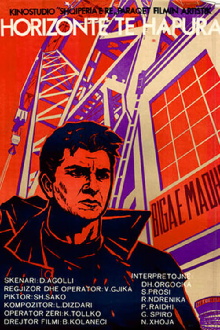
In 1968, Horizonte Te Hapura, directed by Viktor Gjika, one of the pioneers of Albanian moviemaking, broke new ground. Its subject matter was contemporary, rather than being a historical piece or an action drama set among the partisans of World War II. In the story, a dockworker sees that a crane, a crucial piece of shipyard equipment, is being endangered by a violent storm, and despite considerable danger to himself works to save it. ~ Clarke Fountain, Rovi
A man with a low IQ has accomplished great things in his life and been present during significant historic events—in each case, far exceeding what anyone imagined he could do.
In 1960s Wyoming, two men develop a strong emotional and sexual relationship that endures as a lifelong connection complicating their lives as they get married and start families of their own.
The true story of Dr. Hunter "Patch" Adams, who in the 1970s found that humor is the best medicine, and was willing to do just anything to make his patients laugh—even if it meant risking his own career.
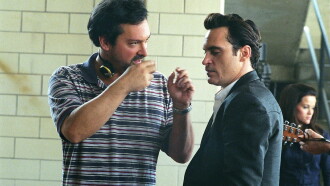
A chronicle of country music legend Johnny Cash's life, from his early days on an Arkansas cotton farm to his rise to fame with Sun Records in Memphis, where he recorded alongside Elvis Presley, Jerry Lee Lewis and Carl Perkins.
The life story of New Zealander Burt Munro, who spent years building a 1920 Indian motorcycle—a bike which helped him set the land-speed world record at Utah's Bonneville Salt Flats in 1967.
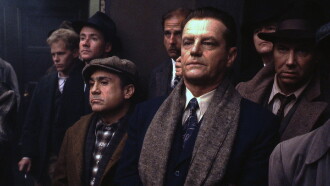
A portrait of union leader James R. Hoffa, as seen through the eyes of his friend, Bobby Ciaro. The film follows Hoffa through his countless battles with the RTA and President Roosevelt.
Documentary by Juan Francisco de Lasa about a pioneer of Spanish cinema. Gelabert attended one of the first sessions of the Lumière's cinématographe in Barcelona.
Two young boys, play hooky from school in order to explore an ultramodern world's fair. They take in the many marvelous scientific and industrial exhibits, obtain literature, eat food, and generally run amok.
A baleful limping man walks through Prague. He is Asmodeus (Juraj Herz), the fiend of lustfulness, entertaining himself by putting together by magic couples of lovers.
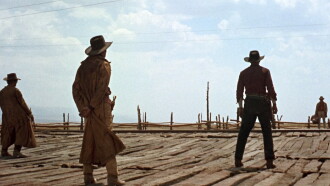
As the railroad builders advance unstoppably through the Arizona desert on their way to the sea, Jill arrives in the small town of Flagstone with the intention of starting a new life.