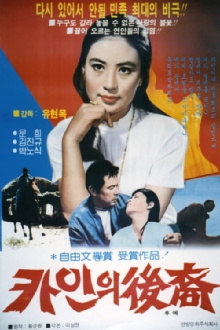
Shortly after Korea gained independence from Japan (1945), North Koreans decide to extort civilians' property in the name of revolutionalizing its land and settle class struggles for proletariats. The film depicts an anti North-Korean concept, detailing the country's situation after the independence. South Korea's submission for the Academy Award for Best Foreign Language Film in 1968.
An artist falls for a married young woman while he's commissioned to paint her portrait. The two invest in the risky tulip market in hopes to build a future together.
Two middle-aged men embark on a spiritual journey through Californian wine country. One is an unpublished novelist suffering from depression, and the other is only days away from walking down the aisle.
A meditation on love and its various incarnations, set within a community of friends in Oregon. It is described as an exploration of the magical, mysterious and sometimes painful incarnations of love.
On a small green island out in the sea, they live in harmony - until a stranger comes. Like a hurricane this rocks the small society, and a killing lets all hidden forces loose.
Four best friends (Tibby, Lena, Carmen & Bridget) who buy a mysterious pair of pants that fits each of them, despite their differing sizes, and makes whoever wears them feel fabulous.
Years into a benevolent alien occupation, mankind is still adjusting to its new overlords. Their technology initially held promise for global prosperity, but rendered most human jobs – and steady income – obsolete.
Popular movie trailers from 1968
These some of the most viewed trailers for movies released in 1968:
Five criminals are arrested after a bank-robbery. One escapes, and the police officer in charge of transporting them arrests a new person at random to cover up for his negligence.
There's nothing like a good, opulent, gaudy musical to lift the spirits, but when it's a 1960's Hong Kong musical orchestrated by a Japanese director and composer, it breaks through the ranks as a classic of campy kitsch.
A Southern soldier in the American Civil War is sent to reconnoiter the enemy positions and becomes trapped beneath a huge pile of rubble by Northern cannon fire.