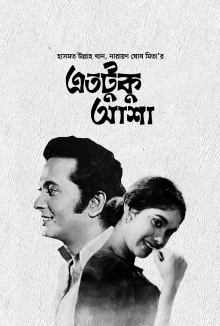
Alam (Anowar Hussain), a young man from a rural background, is forced to leave his family just after the marriage when his wife Luchi (Rosy Samad) feels uncomfortable at his poor home. This makes his father go for earning even at the old age, his lame brother is forced to sell newspapers on the streets, and eventually his younger sister (Sujata) is forced to marry a mentally-challenged person, sacrificing her true love for Kabir (Abdur Razzak), who is again Alam's brother-in-law, to cover up the loan once taken by his father from a village landlord.
High End Yaariyaan is a tale of 3 friends Ranjit Bawa, Jassie Gill, and Ninja who lives abroad. The story narrates how their friendship has evolved over a period of time and the struggles they each go through while living away from their homeland.
Ingrid and her siblings are on the run from the Beserkers who have begun invading the villages, taking over, savagely using the residents on a game where they vs a Beserker, and if they win, they get to survive - only, no one ever wins.
This movie shows the traditions of Kosovar Albanians that live in highlands and also tells a love story of two young people, a boy who lives in a village and a girl who just comes back from the USA to her native homeland.
In a mountain village in the north of Portugal, a murder occurred. A sixteen-year-old boy leaves the house barefoot, under the cold night, towards the forest.
Documentary by Juan Francisco de Lasa about a pioneer of Spanish cinema. Gelabert attended one of the first sessions of the Lumière's cinématographe in Barcelona.
Three identical prints of a single 100 foot fixed-camera take are shown from beginning to end-roll light-flare, with a few feet of blackness preceding/bridging/following the rolls.
A baleful limping man walks through Prague. He is Asmodeus (Juraj Herz), the fiend of lustfulness, entertaining himself by putting together by magic couples of lovers.
"In my film I suggest that there is no greater mystery than that of the protagonists. War and Love are simply equated for what they are; the aftermath is inevitable, and a normal human condition, for which like the ancients one can only have pity and understanding.