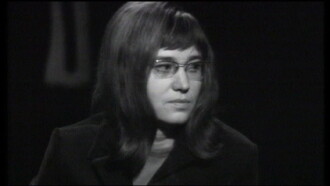
How the graduate student Gudrun Ensslin became a radical and violent woman. After the department store fire in Frankfurt, November 1968, in which Gudrun Ensslin and Andreas Baader was involved the violence and their actions escalated. Soon they were joined by Ulrike Meinhof, Together the three created the urban guerrilla of West Germany, the Baader-Meinhof Gang a.k.a. die RAF - die Rote Armee Fraktion. An episode out of Panorama, NDR.
Inspired by the student revolutions of 1968, two women in Germany and Japan set out to plot world revolution as leaders of the Baader Meinhof Group and the Japanese Red Army.
Documentary series in two parts: 1. A people without a voice (80'), 2. A land in mourning (78'). Part 1: A people without a voice: October 88, the Algerian Republic is faltering, the film goes back to the sources of this tragedy and explains how the face to face between the Islamists and those in power began.
On October 23, 1998, a sniper carrying a high-powered rifle assassinated Dr. Barnett Slepian in his home, altering forever a family, a community, and the bounds of our imaginings about anti-abortion violence.
A reflection on the assassinations of social democrat politician Fernando Buesa Blanco and his bodyguard Jorge Díez Elorza, perpetrated by the terrorist gang ETA in Vitoria-Gasteiz, Basque Country, Spain, on February 22, 2000.
This new documentary by the father-and-son directing team of Daniel and Emmanuel Leconte pays tribute to the 11 journalists of the French satirical magazine Charlie Hebdo who were killed in the January 2015 attack by radical Islamic extremists.
2nd Edition of Loose Change documentary. What if...September 11th was not a surprise attack on America, but rather, a cold and calculated genocide by our own government?We were told that the twin towers were hit by commercial jetliners and subsequently brought down by jet fuel.
Following the 1975 West German Embassy siege in Stockholm, the German Red Army Faction (RAF) terrorist Norbert Kröcher allegedly planned to kidnap Anna-Greta Leijon.
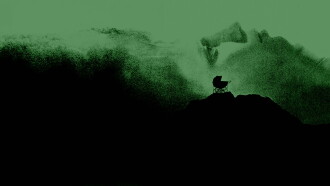
A young couple, Rosemary and Guy, moves into an infamous New York apartment building, known by frightening legends and mysterious events, with the purpose of starting a family.
Three identical prints of a single 100 foot fixed-camera take are shown from beginning to end-roll light-flare, with a few feet of blackness preceding/bridging/following the rolls.
Documentary by Juan Francisco de Lasa about a pioneer of Spanish cinema. Gelabert attended one of the first sessions of the Lumière's cinématographe in Barcelona.
Centring on the legend of the four ancient Chinese heroines, the film was a novelty for audiences at the time, as the singing performance was in Cantonese and used huangmei operatic rhythms—a popular trend in the 1960s, yet it retained traditional flavours by using operatic luogu percussion in the battle scenes.