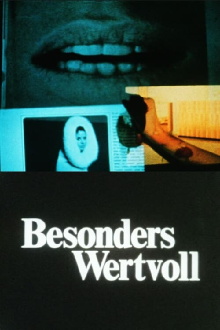
An attack on a piece of reactionary German legislation discriminating against young film directors. The film features a head-on, close-up shot of a penis ‘mouthing’ the parliamentary defense of the law by its author. A landmark in political pamphleteering, the film was selected for the 1968 Oberhausen International Short Film Festival by a committee of leading German critics and promptly banned by the city government, causing the withdrawal of almost all German directors from the festival and a national scandal. The title satirically refers to the official certificate of ‘Particularly Valuable’ given each year to the best film shorts by an Establishment selection.
Forced behind British lines by engine problems, the Red Baron camouflages his plane, swaps uniforms with a dead soldier, and, posing as a Belgian, makes his way to a hospital.
The Three Kingdoms period begins as the walled fortress of Hsin Yang falls to invaders. Centered around this historical event, The Last Days of Hsin Yang follows the escape of the prince of Hsin Yang as he hides with a small family and escapes from the sacked and burning city.
There's nothing like a good, opulent, gaudy musical to lift the spirits, but when it's a 1960's Hong Kong musical orchestrated by a Japanese director and composer, it breaks through the ranks as a classic of campy kitsch.
Humanity finds a mysterious object buried beneath the lunar surface and sets off to find its origins with the help of HAL 9000, the world's most advanced super computer.
In a Canadian mountain resort, Vixen Palmer resides with her naive pilot husband Tom. While he's away flying in tourists, she sleeps with practically everybody including a husband and his wife, and even her biker brother.
Three identical prints of a single 100 foot fixed-camera take are shown from beginning to end-roll light-flare, with a few feet of blackness preceding/bridging/following the rolls.
Centring on the legend of the four ancient Chinese heroines, the film was a novelty for audiences at the time, as the singing performance was in Cantonese and used huangmei operatic rhythms—a popular trend in the 1960s, yet it retained traditional flavours by using operatic luogu percussion in the battle scenes.