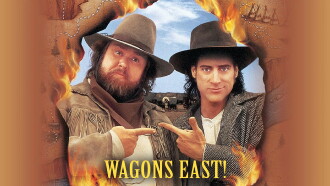
As the west rapidly becomes civilized, a pair of outlaws in 1890s Wyoming find themselves pursued by a posse and decide to flee to South America in hopes of evading the law.
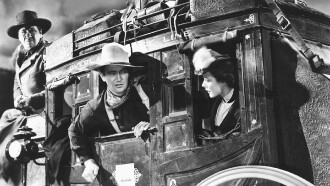
A group of people traveling on a stagecoach find their journey complicated by the threat of Geronimo, and learn something about each other in the process.
After the 1860s Wild West, a group of misfit settlers - including ex-doctor Phil Taylor, prostitute Belle, and homosexual bookseller Julian - decide they cannot live in their current situation in the west.
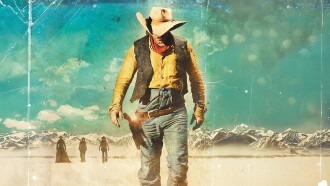
Lyle Swann is a successful off-road racer who mistakenly gets sent back in time 100 years. When a band of outlaws robs Swann of his motorcycle, he's forced to outfox the gangsters and give in to the seductions of a gorgeous local lady.
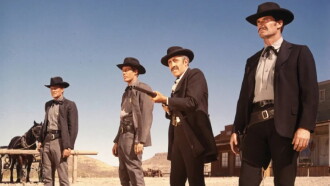
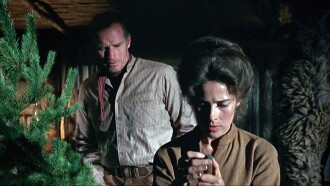
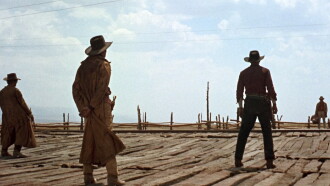
As the railroad builders advance unstoppably through the Arizona desert on their way to the sea, Jill arrives in the small town of Flagstone with the intention of starting a new life.
Documentary by Juan Francisco de Lasa about a pioneer of Spanish cinema. Gelabert attended one of the first sessions of the Lumière's cinématographe in Barcelona.
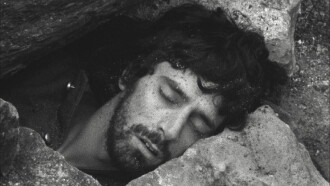
A Southern soldier in the American Civil War is sent to reconnoiter the enemy positions and becomes trapped beneath a huge pile of rubble by Northern cannon fire.
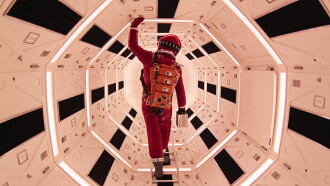
Humanity finds a mysterious object buried beneath the lunar surface and sets off to find its origins with the help of HAL 9000, the world's most advanced super computer.
There's nothing like a good, opulent, gaudy musical to lift the spirits, but when it's a 1960's Hong Kong musical orchestrated by a Japanese director and composer, it breaks through the ranks as a classic of campy kitsch.
"In my film I suggest that there is no greater mystery than that of the protagonists. War and Love are simply equated for what they are; the aftermath is inevitable, and a normal human condition, for which like the ancients one can only have pity and understanding.
Comments
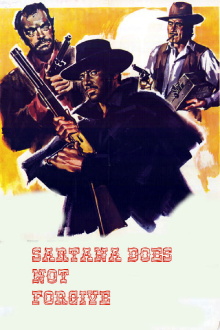
Have you watched Sartana Does Not Forgive yet? What did you think about it?