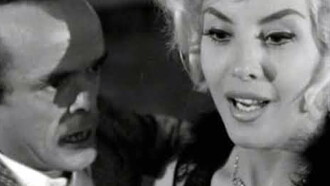
"A work documenting Ankoku Butoh dancer Tatsuji Hijikata’s Revolt of the Flesh (Nikutai no hanran). The work established the relation between Revolt of the Flesh with uprising through the unique methods of photography and editing that is found in Jonouchi’s Gewaltopia series (1968) which represented the student protest movement." - Collaborative Cataloging Japan
Centring on the legend of the four ancient Chinese heroines, the film was a novelty for audiences at the time, as the singing performance was in Cantonese and used huangmei operatic rhythms—a popular trend in the 1960s, yet it retained traditional flavours by using operatic luogu percussion in the battle scenes.
Two young boys, play hooky from school in order to explore an ultramodern world's fair. They take in the many marvelous scientific and industrial exhibits, obtain literature, eat food, and generally run amok.
The Three Kingdoms period begins as the walled fortress of Hsin Yang falls to invaders. Centered around this historical event, The Last Days of Hsin Yang follows the escape of the prince of Hsin Yang as he hides with a small family and escapes from the sacked and burning city.
Comments
Have you watched Tatsumi Hijikata yet? What did you think about it?