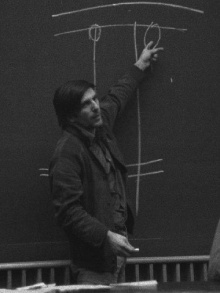
Giefer documents the International Vietnam Congress, which took place on February 17 and 18, 1968 in the Audimax of the Technical University of Berlin (TU). With his photographs of the counter-demonstration, which was organized on 21 February 1968 under the slogan "Berlin stands for freedom and peace" on John-F.-Kennedy-Platz in Berlin-Schöneberg, Giefer also shows the counter-movement.
Anthony Steffen, as a young gunman who works as a circus performer, witnesses the killing of some outlaws, carried out by their leader and is credited with the deed.
Forced behind British lines by engine problems, the Red Baron camouflages his plane, swaps uniforms with a dead soldier, and, posing as a Belgian, makes his way to a hospital.
The Three Kingdoms period begins as the walled fortress of Hsin Yang falls to invaders. Centered around this historical event, The Last Days of Hsin Yang follows the escape of the prince of Hsin Yang as he hides with a small family and escapes from the sacked and burning city.
There's nothing like a good, opulent, gaudy musical to lift the spirits, but when it's a 1960's Hong Kong musical orchestrated by a Japanese director and composer, it breaks through the ranks as a classic of campy kitsch.
Five criminals are arrested after a bank-robbery. One escapes, and the police officer in charge of transporting them arrests a new person at random to cover up for his negligence.
"In my film I suggest that there is no greater mystery than that of the protagonists. War and Love are simply equated for what they are; the aftermath is inevitable, and a normal human condition, for which like the ancients one can only have pity and understanding.