
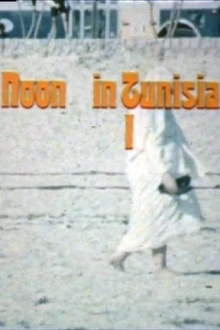
The two-part film "Noon in Tunisia" by Peter Lilienthal is a meeting of jazz and Arabic music at various public or open-air venues in Tunisia. Under the direction of George Gruntz, European and US jazz musicians play his suite-like composition "Maghreb Cantata", which is based on original Bedouin dances, together with Arab performers. The highlight is the Fazani, a rhythm of Bedouin tribes from the desert region of the Libyan-Tunisian border. The recording took place from 5.5. - 24.5.1969 in and around Tunis.
A farmer receives land from the king and discovers a buried golden mortar. He decides to give it to the king out of gratitude, but his clever daughter warns him that the king will surely want him to bring a corresponding pestle as well.
A veteran sea captain abducts his niece for what he believes is his last chance at love. As the sad demon of the ocean Klabautermanden watches the passing of doomed ships, the niece awakens in her uncle's cabin.
The drama revolves around the novelist Sami Al-Bagouri (Fuad Al-Mohandes), whose wife Mahasen (Zahra Al-Ola) is jealous of him so much that she is jealous of his deceased wife (Fekriya).
A gang of kids helps a sea captain search for a pirate’s treasure that’s rumored to be hidden somewhere in the old dilapidated inn the sea captain just inherited from his dead brother.
A student, tired of a too well-mannered fiancé, loses a virginity she considers very embarrassing in the arms of a forty-year-old man, before finding love with a repentant gigolo.
A portrayal of two modern young men and their experiences of love. Jack, a sociology student, is in a relationship with Betty, who is somewhat older than him.
A pretty young anti-marijuana activist is kidnapped by a drug ring, which is determined to teach her a lesson by degrading and violating her in every way possible.
Comments
Have you watched Noon in Tunisia yet? What did you think about it?