Wayne Sourbeer deftly combines visual forms, the original poetry of Kansas-born poet Charles Plymell and an original music score by David Levinson, who was at the time, associate conductor of the Wichita Symphony. Montage II: Ephemeral Blue is the quintessential example of what continental film critics have called “non-verbal communication.” Sourbeer’s images are the foundation for Plymell’s verbal abstractions and Levinson’s brilliant musical score.
Paul, a former womanizer, marries the head of the medical department's "unattractive" daughter Christine because he thinks attractive women can't be trusted and make poor wives.
An adventure story for children set in New Zealand and told in eight sequential episodes. 5 of 8: The escaped criminals drive away from Wellington in a stolen car.
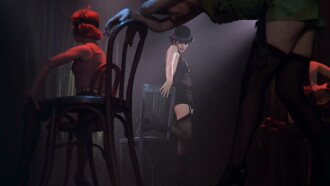
Inside the Kit Kat Club of 1931 Berlin, starry-eyed singer Sally Bowles and an impish emcee sound the clarion call to decadent fun, while outside a certain political party grows into a brutal force.
"A family of Polish immigrants has a difficult time adjusting to life in the United States. The story centers on the son, named Janek, who has trouble fitting in at school and with his family.
This Spanish-Italian co-production tells the story of a man who feels deep guilt for the death of his wife: he, an alcoholic, is convinced that he accidentally caused her fatal fall in their house while he was drunk.
In a French seaside town, at a boarding house for civil servants recovering from surgery and maladies, the six male residents' lives change dramatically when two women arrive: Catherine, lively, sexually liberated, willing to kiss, dance, and sleep with the men, and Leonie, reserved, formal, conservative.
Comments
Have you watched Montage II: Ephemeral Blue yet? What did you think about it?