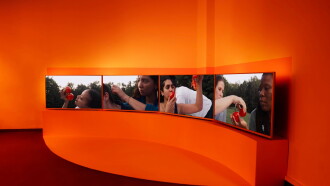
Across the installation's multiple channels, the camera circles a group of artists as they sit together in a field eating, licking, and squeezing ripe tomatoes.
Brakhage's frame-by-frame hand carvings and etchings directly into the film emulsion, sometimes photographically combined with paint, are illuminated by Solomon's optical printing; this footage was then edited by Solomon into a four part 'seasonal cycle'.
Lake gazes down at a still body of water from a birds-eye view, while a group of artists peacefully float in and out of the frame or work to stay at the surface.
A purple and orange fluid spreads in volutes in the maritime estuary of the St. Lawrence. Between visual ballet and lyrical flights, Release plunges us into an enigmatic and sensory experience.
A dramatised documentary which explores ghetto life as seen and felt inside Harlem, based on experiences of the Northside Centre for Child Development.
In a French seaside town, at a boarding house for civil servants recovering from surgery and maladies, the six male residents' lives change dramatically when two women arrive: Catherine, lively, sexually liberated, willing to kiss, dance, and sleep with the men, and Leonie, reserved, formal, conservative.
“It’s not how it used to be.” The words of Cézar Néwashish resonate throughout this short documentary that explores the history of the Atikamekw community of Manawan, Quebec.
An adventure story for children set in New Zealand and told in eight sequential episodes. 5 of 8: The escaped criminals drive away from Wellington in a stolen car.