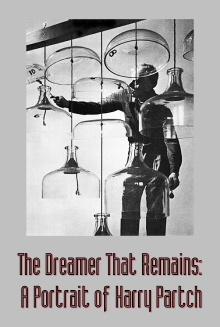
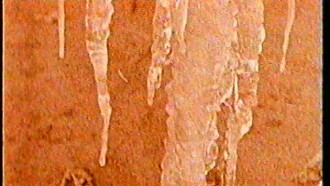
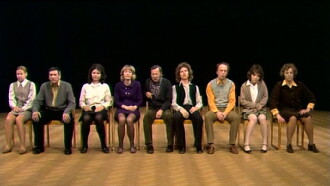
The Dreamer That Remains is a documentary produced by Betty Freeman and directed by Stephen Pouliot in 1972. Here is the director’s original cut along with his commentary. If you’ve never seen Partch or his instruments before, this is the place to start.
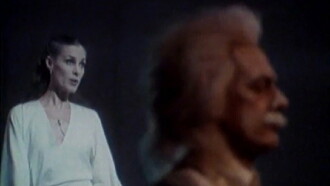
A whirlwind of improvisation combines the images of animator Pierre Hébert with the avant-garde sound of techno whiz Bob Ostertag in this singular multimedia experience, a hybrid of live animation and performance art.
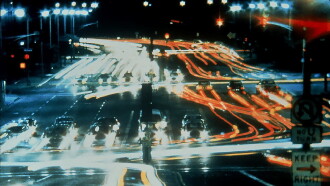
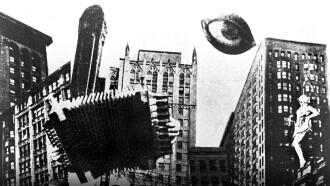
A day in the city of Berlin, which experienced an industrial boom in the 1920s, and still provides an insight into the living and working conditions at that time.
Ivan Ladislav hides a true chamber of wonders behind the clear, mathematically abstract structure of his films and videos, meticulously compiled rhythmically frame for frame, each work likewise presenting an analysis of the film medium.
Modified flashlights and stripped down video projectors explore the visual complexities of the ordinary world: a tunnel, a clump of grass, a discarded table, the underside of a bridge, fog, a piece of rock and a tree.
Popular movie trailers from 1972
These some of the most viewed trailers for movies released in 1972:
Paul, a former womanizer, marries the head of the medical department's "unattractive" daughter Christine because he thinks attractive women can't be trusted and make poor wives.
An adventure story for children set in New Zealand and told in eight sequential episodes. 5 of 8: The escaped criminals drive away from Wellington in a stolen car.
A frustrated Frankfurt innkeeper is recruited as an agent for the "Gehlen Organization" and after a short training period, during which he is familiarized with sophisticated espionage methods, he takes his first steps as a spy.
This Spanish-Italian co-production tells the story of a man who feels deep guilt for the death of his wife: he, an alcoholic, is convinced that he accidentally caused her fatal fall in their house while he was drunk.
"A family of Polish immigrants has a difficult time adjusting to life in the United States. The story centers on the son, named Janek, who has trouble fitting in at school and with his family.
During the Japanese occupation of Shanghai, Chen Zhen, the star pupil of a recently-deceased martial arts teacher battles a Japanese dojo which seeks the demise of his fighting school.
Comments
Have you watched The Dreamer That Remains: A Portrait of Harry Partch yet? What did you think about it?