Caste Aside is a documentary about the British government's controversial decision on whether or not to introduce legislation against caste discrimination in the UK.
A short animated documentary featuring archival recordings of the filmmaker's Volga-German Great-Great-Grandmother, Mary Frank Lind, in which she recalls key memories of childhood—her father's windmill, warm rains, wolf sightings, bone trading, and her passion for carpentry, which broke gender norms but was supported by her father.
BERTHA LUTZ: WOMEN AND THE U.N. CHARTER reveals the important and unknown role of a Brazilian biologist and feminist in ensuring that gender issues were addressed at the basis of the United Nations.
In this documentary, 6 protagonists tell their personal experiences of abortion and sterilization, from unplanned pregnancy to a happy mother and vice versa from the wanted child to regretting motherhood.
A fictionalised documentary that tells the story of María Lejárraga, writer and pioneer of feminism in Spain during the 1920s, whose work was produced under the name of her husband, the theatre impresario Gergorio Marinez Sierra.
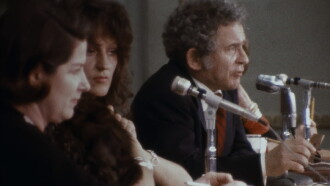
On the evening of April 30, 1971, a standing room only audience of local literati and feminists packed New York City’s Town Hall to watch Norman Mailer, who had just written “The Prisoner of Sex,” grapple with a panel of passionate feminists.
Sam and Buddy, two highway robbers, join with Colonel Quint, a big crook, who sold his services to Morgan, the banker, in order to free Baby, the banker's daughter, abducted by Espartero and his killers gang.
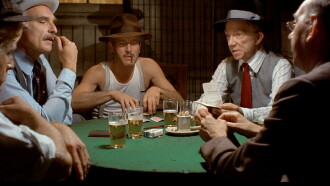
A novice con man teams up with an acknowledged master to avenge the murder of a mutual friend by pulling off the ultimate big con and swindling a fortune from a big-time mobster.
In 1913, in Oklahoma, oil derrick owner Lena Doyle, aided by her father and a hobo, is stubbornly drilling for oil despite the pressure from major oil companies to sell her land.
Don Serafin has a complex: to all the beautiful women always seen with a beard. To remove the complex and try to cure him, his friends will lead to Biarritz.
Two rival street gangs from Kowloon go to war over turf and bar girls so as to dominate the area and maximize their takings; however things go from bad to worse as the girls start to get involved in the bloody feud.
Comments
Have you watched Sí podemos yet? What did you think about it?