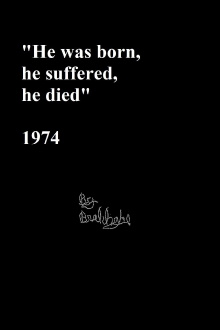
"The quote is Joseph Conrad answering a critic who found his books too long. Conrad replied that he could write a novel on the inside of a match-book cover, thus (as above), but that he "preferred to elaborate." The "Life" of the film is scratched on black leader. The "elaboration" of color tonalities is as the mind's eye responds to hieroglyph." - S.B. (Note: it seems possible that Brakhage misattributed this quote, which appears to be from William Faulkner and/or W. Somerset Maugham). Preserved by the Academy Film Archive in 2006.
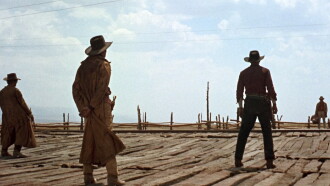
As the railroad builders advance unstoppably through the Arizona desert on their way to the sea, Jill arrives in the small town of Flagstone with the intention of starting a new life.
As the west rapidly becomes civilized, a pair of outlaws in 1890s Wyoming find themselves pursued by a posse and decide to flee to South America in hopes of evading the law.
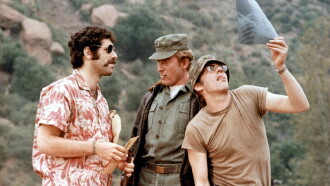
One of the world's most acclaimed comedies, M*A*S*H focuses on three Korean War Army surgeons brilliantly brought to life by Donald Sutherland, Tom Skerritt and Elliott Gould.
Wallace's whirlwind romance with the proprietor of the local wool shop puts his head in a spin, and Gromit is framed for sheep-rustling in a fiendish criminal plot.
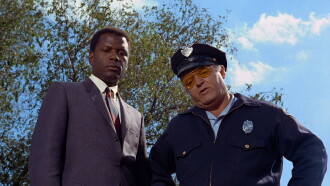
African-American Philadelphia police detective Virgil Tibbs is arrested on suspicion of murder by Bill Gillespie, the racist police chief of tiny Sparta, Mississippi.
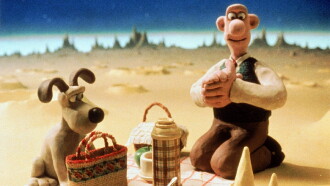
Wallace and Gromit have run out of cheese, and this provides an excellent excuse for the duo to take their holiday to the moon, where, as everyone knows, there is ample cheese.
Two friends named Amir Palang and Ahmad Nane Baba Jegaraki are interested in Asieh ; But Asieh is interested in Amir, and Amir tries to stay away from Asieh in favor of Ahmad.
Portrays the challenges of creating a film about nuclear disaster amid public apathy. It captures behind-the-scenes moments as the crew discusses the gravity of nuclear threats, the importance of preparation, and the emotional impact of a nuclear attack.