In March, 1974, the Cree of the Mistassini area in northern Québec met to discuss their long-term future. After three hundred years of minimal contact with the white man, they had been offered 'compensation' by the government of Québec for the effects of the James Bay power project. But they decided that nothing, neither jobs nor money, meant more to them than their land. The film presents the issues under these headings: The Conflict, The Hunting Culture, The Schools, The Villages, The Fight for the Land.
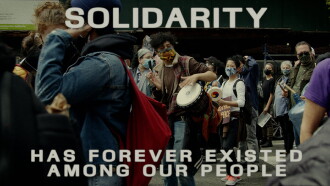
In the face of AAPI violence, an intergenerational coalition of Black, Indigenous, Latinx, Asian, People of Color organizers come together to organize a march across historic Washington Heights and Harlem, as a continuation of the historic and radical Black and Asian solidarity tradition.
In July 1990, a dispute over a proposed golf course to be built on Kanien’kéhaka (Mohawk) lands in Oka, Quebec, sets the stage for a historic confrontation that would grab international headlines and sear itself into the Canadian consciousness.
The Australian Aborigines (in this film anyway) believe that this is the place where the green ants go to dream, and that if their dreams are disturbed, it will bring down disaster on us all.
In the early 1960s the Canadian government conducted an experiment in social engineering. Three young Inuit boys were separated from their families in the Arctic and were sent to Ottawa, the nation's capital, to live with white families and to be educated in white schools.
A documentary account by award-winning filmmaker John Ferry of the events that led up to the 1969 Native American occupation of Alcatraz Island as told by principal organizer, Adam Fortunate Eagle.
A Sámi woman fights for her right to claim a tax deduction against the purchase of a dog. Why the Swedish authorities fail to recognize the dog's use as a reindeer herding tool versus a pet opens up a larger discussion about Indigenous rights and economic discrimination in this humorous takedown of the Swedish government's ignorance of Sámi culture.
"Here Where It All Ends" is an experimental, poetic short film that moves between documentary and fiction to address an endangered culture, that of indigenous people in the
Brazil.
This film follows the aftermath of the Oka crisis, which brought Indigenous rights into sharp focus. After the barricades came down, the Royal Commission on Aboriginal Peoples was created, and travelled to more than 100 communities and heard from more than 1,000 representatives.
In the year 2061, where only one utilitarian race -- known as 'The Nation' -- is recognized, a Native American man is imprisoned for speaking his ancient tribal language.
Ginger Côté uses the words of Heather Archibald, an activist who grew up in foster care and who died, to honor the memory of the young woman and also to advocate for a change in policies towards First Nations.
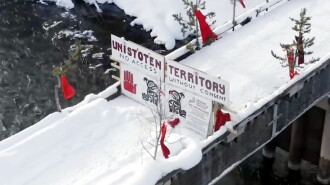
In this era of “reconciliation”, Indigenous land is still being taken at gunpoint. Unist’ot’en Camp, Gidimt’en checkpoint and the larger Wet’suwet’en Nation are standing up to the Canadian government and corporations who continue colonial violence against Indigenous people.
Popular movie trailers from 1974
These some of the most viewed trailers for movies released in 1974:
Allied to a four-year Daily Mirror campaign by John Pilger that helped achieve compensation for many of the forgotten and mostly working class victims of the notorious drug prescribed to women during pregnancy.
Following Tung's death in a mysterious plane crash, a police investigator replaces him to investigate the shady dealings of a gang of criminals led by Feng Wei, cousin of the dead.
Female gladiators fight to the death. Inspired by the story of Spartacus, follow the adventures of a bevy of slave girls who, upon finding themselves thrust into the gladiator ring, mount a vicious rebellion to fight their way to freedom.