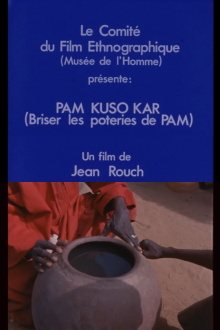
In February 1974, Pam Sambo Zima, the oldest of the priests of possession in Niamey, Niger, died at the age of seventy-plus years. In his backyard, the followers from the possession cult symbolically break the dead priest's ritual vases and cry for the deceased while dividing up the clothes of the divinities.
In the South Seas, Samoan village life is portrayed with a painterly eye. Blending ethnographic detail with a romanticized 'Gauguin idyll', the film celebrates daily rituals, communal traditions, and the passage into adulthood, suffused pride of beauty and pride of strength.
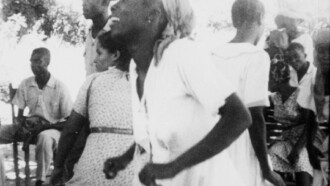
This intimate ethnographic study of Voudoun dances and rituals was shot by Maya Deren during her years in Haiti (1947-1951); she never edited the footage, so this “finished” version was made by Teiji Ito and Cherel Ito after Deren’s death.
AMIN portrays Qashqai musician Amin Aghaie, a young modern nomad and his family who despite facing steep financial, cultural and political obstacles are dedicated to their art and culture.
The young goat herders from the cliff of Bandiagara practice on the stone drums of their ancestors. An ethnomusicological film experiment describing the subtle plays of the right and left hand of Dogon drummers.
A synaesthetic portrait made between French Polynesia and Brittany, Color-blind follows the restless ghost of Gauguin in excavating the colonial legacy of a post-postcolonial present.
A unique 'direct cinema' feature length documentary (no narration or interviews) originally filmed in the Spring of 1970 and concluded during the Summer of 2017 (footage added, restored, and re-edited).
While no wrestling is actually depicted, Atilogivu: The Story of a Wrestling Match documents gymnastic dancing to drum and flute music of the Ibu people, east of the River Niger.
Crafty railroad worker Bart becomes the first Black sheriff of Rock Ridge, a frontier town about to be destroyed in order to make way for a new railroad.
A collage film, a dialogue between mother and the unborn child, the film can be seen as a personal self-analysis by René Paquot, who dreamily delivers his conflicts with maternal, medical and religious authority.