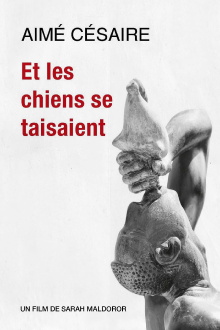
For 'Et les chiens se taisaient' Maldoror adapted a piece of theatre by the poet and politician Aimé Césaire (1913–2008), about a rebel who becomes profoundly aware of his otherness when condemned to death. His existential dialogue with his mother reverberates around the African sculptures on display at the Musée de l'Homme, a Parisian museum full of colonial plunder whose director was the Surrealist anthropologist Michel Leiris.
Servais Mont, a freelance photographer who works taking compromising photos, gets fascinated by Nadine Chevalier, a tormented low-budget movie actress married to an eccentric film photo collector.
Berlin at the end of the 19th Century. Alexander Hoffmann is an ambitious PhD student of Ethnology. When a delegation of the Herero and Nama tribes travels to Berlin during a ‘Colonial Exhibition’, he takes a special interest in their young female translator Kezia Kambazembi as subject for his studies.
The title of Truth Through Mass Individuation references Carl Jung. An isolated figure is seen performing successively more aggressive actions — dropping a cymbal among a flock of pigeons, firing a rifle in a deserted city street.
During the 1972 elections, two reporters' investigation sheds light on the controversial Watergate scandal that compels President Nixon to resign from his post.