Sarah Maldoror Trailers
Mário TrailerForeword to Guns for Banta TrailerAfrique[s], une autre histoire du XXème siècle - Acte 1 Trailer
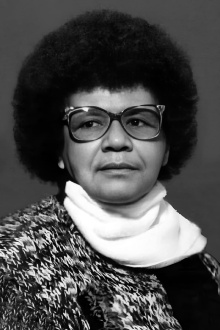
Sarah Maldoror (19 July 1929 − 13 April 2020) was a French filmmaker of French West Indies descent. She is best known for her feature film Sambizanga (1972) on the 1961–1974 war in Angola.
After her studies, Maldoror, worked as an assistant on Gillo Pontecorvo's acclaimed film, The Battle of Algiers (1966). She also worked as an assistant to Algerian director Ahmed Lallem.
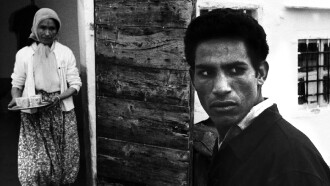
Maldoror's short film, Monangambee (1968), was set in Angola, based on a story by Angolan writer José Luandino Vieira. The title of this 17-minute film, Monangambée, refers to the call used by Angolan anti-colonial activists to signal a village meeting. The film was shot with amateur actors in Algeria. It tells the story of a poor woman who visits her husband, who is imprisoned in the city of Luanda. The film was selected for the Director's Fortnight at Cannes in 1971, representing Angola.
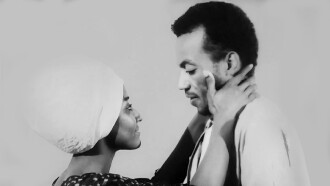
Her first feature film, Sambizanga (1972), was also based on a story by Vieira (A vida verdadeira de Domingos Xavier), and is set in 1961 at the onset of the Angolan War of Independence. Guardian film writer Mark Cousins included Sambizanga in a 2012 list of the ten best African films, calling it "as bold, as well-lit as Caravaggio paintings".

Most Popular Sarah Maldoror Trailers
Total trailers found: 57
01 January 1979
Sarah Maldoror finds inspiration in the hidden corners of Paris, where architecture was shaped by foreign styles and influences.
27 April 1966
Documentary dialogue with young women in Algiers on their experience of independence shortly after their country's independence.
08 September 1966
Former petty criminal Ali la Pointe becomes a commander of the Algerian Front de Liberation Nationale, directing a guerilla insurgency against the colonial French occupation.
17 October 2026
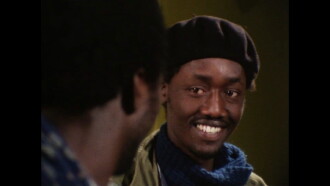
Bokolo and Mamadou, sweepers in the city of Paris, are looking for a way to pay for the return home of one of their sick comrades.
01 January 1981
Maldoror casts a sympathetic light on one of Haitian literature’s most influential figures, the poet and political activist René Depestre.
05 August 1987
Omar, a young Franco-Algerian from La Garenne-Colombes, decided to spend his vacation in the country of his ancestors, Algeria.
10 July 1979
Short piece for the TV series Aujourd'hui en France [Today in France]. Reporting on a Joan Miró exhibition at the Maeght Foundation, Sarah Maldoror enjoys filming the Spanish painter and sculptor engaging with children during a theatre piece.
28 May 1983
A story of political imprisonment set in a mental hospital where the Stalin state police placed whoever their opponents were.
01 January 1968
Filmmaker-griot coming from the theater, it was with a camera, while the war in Vietnam occupied everyone's minds, that Sarah Maldoror gave visibility to the African wars of decolonization: Angola, Guinea Bissau, French Guinea, Cape Verde.
01 January 1978
Sarah Maldoror’s camera roams the famous flagstones and foliage of Père Lachaise, visiting its nooks and cats, to the sound of poems such as Liberté, by Paul Éluard.
26 April 1973
Domingos is a member of an African liberation movement, arrested by the Portuguese secret police, after bloody events in Angola.
01 January 1987
Aimé Césaire - Le Masque des mots is a portrait of the Martinican writer who calls himself a rebellious negro and for whom the poetic act represents an act of freedom.
01 January 1969
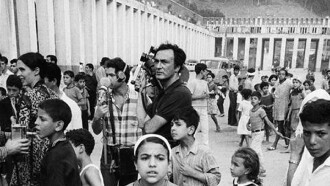
Festival panafricain d'Alger is a documentary by William Klein of the music and dance festival held 40 years ago in the streets and in venues all across Algiers.
15 May 1984
A portrait of Haitian singer Toto Bissainthe, whose musical journey is marked by her desire to disseminate creole singing.
01 January 1985
Sarah Maldoror interviews women of different nationalities who serve as “public” writers, linking French administrative bodies with people who cannot speak or write French.
02 May 1995
Léon G. Damas (1912–1978) was the first poet to “live Négritude”, according to the Senegalese poet, politician and cultural theorist Léopold Sédar Senghor.
01 January 1977
Documentary on the négritude movement through one of its founders, Aimé Césaire.
16 January 2002
Exploring the extraordinary contributions of women filmmakers from Africa and the diaspora, Beti Ellerson’s engaging debut intersperses interviews with such acclaimed women directors as Safi Faye, Sarah Maldoror, Anne Mungai, Fanta Régina Nacro and Ngozi Onwurah with footage from their seminal work.
01 January 2011
Originally an analog slide show made for two projectors, this work recounts the making of Sarah Maldoror's lost and surely never-to-be-seen first film Guns for Banta.
17 October 2026
Some teenagers sign up for the contest: "Describe your neighborhood", whose first prize is a trip to Milan.
01 January 1999
Sarah Maldoror ou la nostalgie de l'utopie is a Togolese short documentary film directed by Anne-Laure Folly.
27 April 1976
For 'Et les chiens se taisaient' Maldoror adapted a piece of theatre by the poet and politician Aimé Césaire (1913–2008), about a rebel who becomes profoundly aware of his otherness when condemned to death.
01 January 1980
Documentary short that explores the meaning of the locals’ African identity through the Carnival festivities.
01 January 1998
In this documentary about Reunion Island, Maldoror begins with a look at an exhibition by sculptor Alain Seraphine, with automated drumming machines and other installations.
01 January 1979
Documentary about Cape Verde and the island of Fogo produced by the revolutionary government of the new country.
01 January 1979
Sarah Maldoror uses Carnival as her approach to the history of colonization and black culture. Carnival is understood here as a festivity during which the limits are transgressed, the world is circumnavigated, and the dominator becomes the dominated, in addition to being an explosion of music and sensations, a great collective performance in which the characteristics of négritude-identity comes forth.
20 July 2005
The Mozart Residence is home to several "new owners" of all origins: a new concierge, Paco, of Spanish origin, who has just been released from prison, arrives at the residence.
01 January 1989
In this documentary, Sarah Maldoror offers a portrait of the Mexican painter Vlady (1920-2005, born Vladimir Kibaltchich), filming mainly his works with voice-over commentary by the artist himself, answering the filmmaker's questions.
01 January 2003
The filmmaker Sarah Maldoror films the writer Édouard Glissant at the Fort de Joux (in the Jura), in the cell where the Haitian general Toussaint Louverture was held prisoner until his death in 1803.
01 January 1982
This modest portrait of the fashion designer Emanuel Ungaro seems to mark a departure from Sarah Maldoror’s usual subjects, but it nonetheless reveals her abiding fascination with the sensuality of the creative act.
26 December 1976
Broadcast from 1977 to 1987 on FR3, every Sunday morning, for 1h30, Mosaïque is a variety show with a set where music groups from the countries of origin of immigration perform, and which broadcasts reports on these countries and on immigrants who live in France.
29 March 1987
For the France 3 show, Mosaïque, Sarah Maldoror met Assia Djebar on Sunday March 29, 1987 on the occasion of the publication of her book Ombre Sultane.
01 January 1985
In this segment on immigrant cultures for the television program Mosaïque, a young Senegalese woman who cooks in a workers’ hostel dreams of traveling throughout France and getting to know her adopted country, taking issue with the cliché of the impoverished and helpless immigrant.
01 January 2009
Documentary about Colombian artist Ana Mercedes Hoyos, which deals with slavery and Afro-Caribbean cultures.
01 January 1978
There is a gap separating the surrealism from the Interwar period and that of the post-war era, and that is the way this movement would understand racial difference.
02 May 1976
Alternating interview segments, shots of Martinique landscapes and scenes from Aimé Césaire's play La Tragédie du roi Christophe (1963), Sarah Maldoror portrays her friend as a politician, a poet, and a founder of the Négritude movement.
25 January 2024
Are even the best and brightest revolutionary movements doomed to inevitable compromise, betrayal and failure? That question haunts this documentary, a biography of Angolan-born Mário Pinto de Andrade (1928–1990), a key figure in African revolutionary and anti-colonial struggles.
01 January 1986
In this short piece, fledgling editors, reporters, and illustrators describe their work on Point Virgule, a newspaper by and for young people, including publishing articles on racism.
19 November 2009
Shortly after his death in 2008, Maldoror made this film about her longtime friend and collaborator, the Négritude poet Aimé Césaire.
01 January 1986
Maldoror traces the dramatic life of the self-taught sculptor Alberto Carlisky, who fled his native Argentina after being imprisoned in 1944 by the Perón regime for his political views, and who apprenticed in the Paris studio of the Russian Cubist sculptor Ossip Zadkine before striking out on his own.
01 January 1996
Film dedicated to Toto Bissainthe, the Haitian singer that Sarah Maldoror also filmed at an earlier stage.
01 January 1970
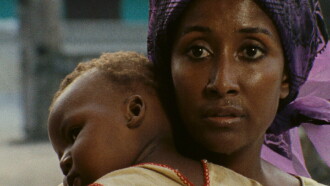
Guns for Banta is the first feature-length film by Sarah Maldoror. Shot in Guinea-Bissau, it follows the life and untimely death of Awa, a countrywoman involved in the African Party for the Independence of Guinea and Cape Verde (PAIGC).
04 May 1986
In this short piece, fledgling editors, reporters, and illustrators describe their work on Point Virgule, a newspaper by and for young people, including publishing articles on racism.
05 October 1986
The Senegalese man of the film’s title is Léopold Sédar Senghor, the poet and first president of Senegal, who is remembered by his neighbors in Normandy.
01 January 1984
Portrait of the French painter-etcher, lithographer and director.
08 October 1980
First staged in Krakow and the Gdansk shipyards in 1980, where Poland’s Solidarity movement was born, and here performed at the Théâtre des Bouffes du Nord in Paris, Wielopole, Wielopole by the theater company Cricot 2 merges themes of Christ’s Passion and fascism with the Polish director Tadeuz Kantor’s own childhood memories.
26 November 1984
Sarah Maldoror observes a stage production of Paul Claudel’s The Hostage at the Théâtre de la Comédie in Reims.
16 November 1986
In this report on an annual conference known as RIFEN, Black women from around the world gather to discuss points of common interest and need, including community leadership and shared experiences of migration and transplantation.
15 December 1985
Sarah Maldoror reports on Christiane Diop, editor of the publishing house Présence africaine, which includes an interview with illustrator Sophie Mondesir, about her work as the first black woman to run a major publishing house in Paris.
01 January 1980
Sarah Maldoror documents the opening of the Théâtre Noir de Paris, a Négritude-inspired theater company and cultural association dedicated to artists and performers from Africa and the French Antilles.
01 June 1986
Commemorating the 1986 Tunis-Paris exhibition Privileged Spaces and Times: French-Speaking Intellectual Production in Tunisia, Sarah Maldoror’s film points the way toward a more polyvocal understanding of the role of France’s National Library worldwide.
01 January 2005
A short animation about motion and poetry.
17 October 1987
A portrait of the famous photographer, shot for his 1987 exhibition at the musée d’art et d’histoire de Saint-Denis.
01 January 1977
A short film about all facets of the Parisian Gothic basilica, which features both a cathedral and a necropolis, the latter containing tombs of French kings, from the 10th to the 19th century.
01 January 1980
Maldoror reports on a painting exhibition of the Cuban artist Wifredo Lam at the Artcurial gallery in Paris in 1980.
01 June 1972
Saint-Denis-sur-Avenir describes the problems faced by works in one of Paris’s working-class suburbs.