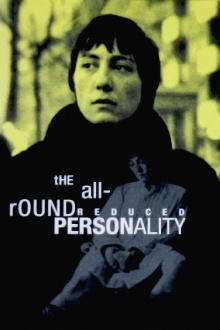
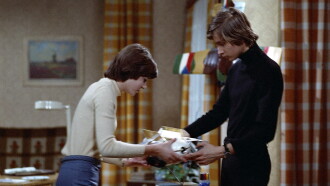
Edda Chiemnyjewski, a freelance press photographer and single mother living in 1970s West Berlin, is confronted with the fact that "a cook has no time for affairs of state". She also fails to find a market for the project she has been working on with her women′s photography group that seeks to document the city. While from today′s perspective the city, which becomes one of the film′s protagonists, looks like post-war Berlin, little has actually changed as regards the precarious existence of free-lancers. With a heavy dose of self-irony Helke Sander, who also plays the leading role, tells of a divided life in a divided city.
A retelling of the story of France’s iconic but ill-fated queen, Marie Antoinette - from her betrothal and marriage to Louis XVI at fifteen to her reign as queen at nineteen and ultimately the fall of Versailles.
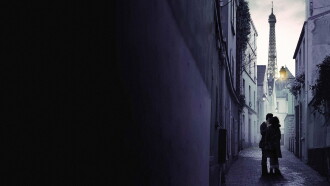
Olivier Assayas, Gus Van Sant, Wes Craven and Alfonso Cuaron are among the 20 distinguished directors who contribute to this collection of 18 stories, each exploring a different aspect of Parisian life.
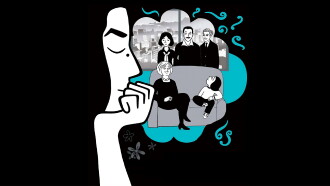
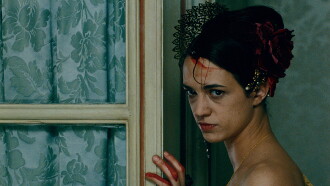
In 1970s Iran, Marjane 'Marji' Satrapi watches events through her young eyes and her idealistic family of a long dream being fulfilled of the hated Shah's defeat in the Iranian Revolution of 1979.
Starting his new job as an instructor at a New England school for the deaf, James Leeds meets Sarah Norman, a young deaf woman who works at the school as a member of the custodial staff.
In the Realms of the Unreal is a documentary about the reclusive Chicago-based artist Henry Darger. Henry Darger was so reclusive that when he died his neighbors were surprised to find a 15,145-page manuscript along with hundreds of paintings depicting The Story of the Vivian Girls, in What is Known as the Realms of the Unreal, of the Glodeco-Angelinnian War Storm, Cased by the Child Slave Rebellion.
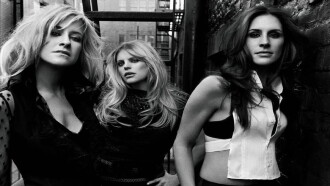
Shut Up and Sing is a documentary about the country band from Texas called the Dixie Chicks and how one tiny comment against President Bush dropped their number one hit off the charts and caused fans to hate them, destroy their CD’s, and protest at their concerts.
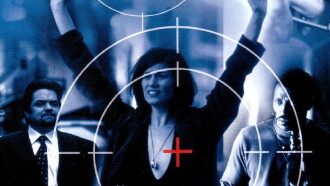
As the heir and current marketing director for one of the nation's biggest gun manufacturers, Liberty Wallace is indifferent to the atrocities made possible through her business and her CEO husband, Victor.
Dead Eye and his gang are terrorizing a small Chinese region. Chan Ling and his group of misfit friends take it upon themselves to stop evildoers by learning the Super Kung Fu style.
A comic strip detective and a superhero are hired to investigate separatedly the successive murders of CEOs within a real life corporation symbolizing a nation, while subversive groups and members of the establishment lead a war for power.
A man is brutally beaten so he and 4 others head to the beach for refuge and relaxation. It soon becomes clear that they've been imprisoned by person or persons unknown.
Navendhu Kumar lives a poor lifestyle with his handicapped father, Mohan, housewife mom, two unmarried sisters, Leela and Rajni, a younger brother, Kundan, and a sweetheart in Meena.
In the autobiographical tradition of the earlier Sincerities, this film takes up the light-threads of our living 14 years ago when the Brakhage family found home and "settled," like they say, into some sense of permanence.
Semi-follow up to "The Deadly Triangle" dealing with a sheriff and his deputy in a sleepy ski town involved with a group of urbanites planning a dangerous mountain climb as well as investigating sabotage in a condominium development.
Comments
Have you watched The All-Around Reduced Personality: Redupers yet? What did you think about it?