Helke Sander Trailers
Helke Sander: Cleaning House TrailerCome with Me to the Cinema – The Gregors TrailerA German Youth Trailer
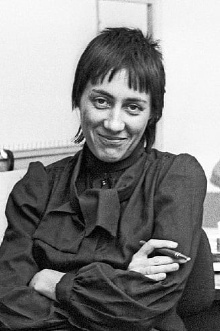
Helke Sander is a German feminist filmmaker and author.

Helke Sander: Cleaning House TrailerCome with Me to the Cinema – The Gregors TrailerA German Youth Trailer
Helke Sander is a German feminist filmmaker and author.

Total trailers found: 41

06 November 1990
A documentary with fictious elements. Ms. Elisabeth (Lieschen) Müller from Austria comes to Bonn, Germany to find herself a man.
24 May 2002
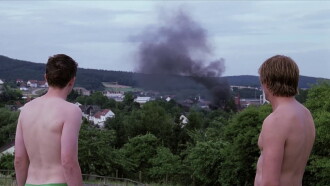
A young German soldier named Paul goes AWOL and returns to his childhood home in the countryside. Over a few summer days, Paul evades the responsibilities of everyday life and falls in love with his brother’s girlfriend, disrupting the lives of everyone in his circle.
15 May 2015
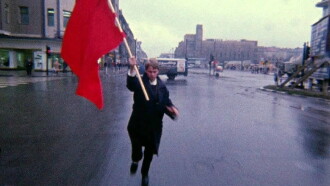
At the end of the 1960s the post-war generation began to revolt against their parents. This was a generation disillusioned by anti-communist capitalism and a state apparatus in which they believed they saw fascist tendencies.

13 January 1988
Within four episodes ("Er am Ende", "Muss ich aufpassen", "Eva" and "Are You Lonesome Tonight?" ) are being told adventures of love sick Felix.

04 February 1977
Set in contemporary Vienna, the film involves a photographer, Anna, who discovers that extraterrestrial beings are colonizing the minds of her fellow citizens by raising the human aggression quotient.
31 December 1967
“Six young people move through a city in order to establish the starting point of their joint action.
01 January 1967
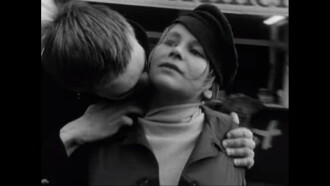
A concise blast of feminist film making, Sander's first film is a tense yet playful four minute short that dissects a typical urban scene at a bus stop on a busy street in Berlin.
30 June 1968
Ihre Zeitungen is a political film rooted in the 1968 student campaign against the Springer press group, which controlled popular dailies such as the Berliner Zeitung and the Bild Zeitung.
09 October 1970
The film documents the work of an anti-authoritarian and self-organized school store in Witzlebenstraße in Berlin-Charlottenburg, which emerged as a critique of the development of children's stores.

01 January 1968
Documentary by Helke Sander, in collaboration with Harun Farocki (among others), about the campaign of the West German New Left against the publishing house Springer, particularly its control and manipulation of the news.

21 February 1985
A woman threatens to jump off a crane with her two young children in order to secure affordable housing.

01 September 2022
From the 1950s onwards, Erika and Ulrich Gregor brought countless film historical milestones to Berlin and shaped cinema discourse in post-war Germany.
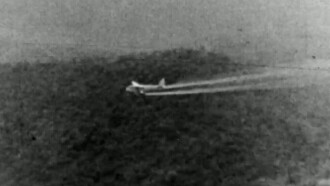
26 July 1969
An austere treatise on the military-industrial complex that produces napalm.
01 February 1987
A sexual assault and its consequences. The 2nd of three self-contained shorts from Helke Sander's series of shorts entitled From the Reports of Security Guards & Patrol Services.
27 September 2025
I was on a ship – this sounds like a novel: I had just embarked for Venezuela on June 2, 1967 as the Shah of Iran was arriving in West Berlin.
22 April 1986
When an ordinary-looking man tries to buy a mirror in an upscale shop, class conflicts arise. The third part of the short film series.
01 January 1966
Analysis of an incident in Nazi Germany involving a man and a jewish woman.
13 February 2005
Only the chosen few know this woman who started working as a secretary for the German Film and Television Academy (DFFB) on 13 February, 1966.
01 January 1984
Berlin Underground-star Ulrike S. went to the Toronto-Filmfestival and then to New York - to find out something about the film business and also about her own desires, daydreams and nightmares.
01 January 1986
Part of the episodic film, Seven women, seven sins, this is a different take on the Adam and Eve story.

19 April 1986
Seven Women, Seven Sins (1986) represents a quintessential moment in film history. The women filmmakers invited to direct for the seven sins were amongst the world's most renown: Helke Sander (Gluttony), Bette Gordon (Greed), Maxi Cohen (Anger), Chantal Akerman (Sloth), Valie Export (Lust), Laurence Gavron (Envy), and Ulrike Ottinger (Pride).
22 February 1992
Based on years of research into the mass rapes committed by the Red Army at the end of the Second World War.
07 March 1984
Story concerns two friends, Freya and Irmtraut and their relationships with the same man, Traugott, who finds it impossible to choose between the two women.
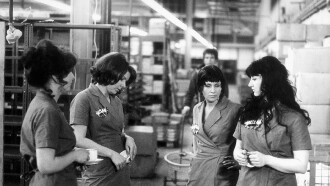
04 July 1971
In a critique to the Berliner films that depicted labour problems always through masculine lens, Sander changes the point of view.
25 October 1997
Jenny is on the road in her film producer's Rolls-Royce, which she has to drive to a film shoot and a wedding.
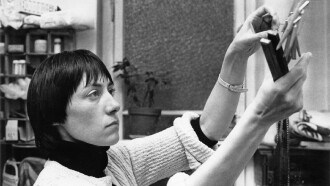
27 February 1978
Edda Chiemnyjewski, a freelance press photographer and single mother living in 1970s West Berlin, is confronted with the fact that "a cook has no time for affairs of state".
12 June 1981
At the end of the 1960s, a young woman laid the foundation of the women's movement. As well as political initiatives against male dominance, a detailed picture was drawn of society, which established the women’s motivation.
09 November 2005
A documentary essay on the 1960s women's liberation movement in Germany and it's developments and conflicts through the following decades.
11 November 2001
A woman from a big city moves to a small village near the former border zone between East and West Germany.
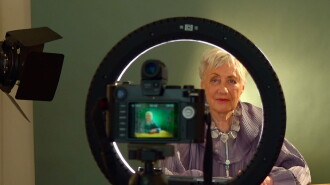
01 November 2023
Filmmaker and author Helke Sander is an icon not only of the women's movement, but also of new German cinema.
07 July 1967
Documentary showing the daily routine of Sander’s seven year old son, Silvo.
01 October 1969
A documentary about the events at the German Film and Television Academy Berlin (dffb) in November 1968, which led to the termination of the training contracts of 18 students.
01 January 1976
A look into the life of Holger Meins, the German cinematography student who became a revolutionary and a prominent voice in the Vietnam War protest movement.
27 February 1973
Seven young women from Berlin discuss their experiences with the pill in a studio setting and react to the ideas that young men of the same age have about this contraceptive.
01 January 1969
The weaker sex must become stronger - but how can this be achieved? The central keyword of the six filmmakers Claudia von Alemann, Susanne Beyeler, Erika Runge, Helke Sander, Ula Stöckl and Hanna Laura Klar is: emancipation.
09 May 1999
Lucy, who is already human-like, claims that the first humans were mothers: The mother built a nest to secure the child when it became too heavy to carry.
24 April 1971
Documentary about the situation of film students after graduation.
22 February 1992
Based on years of research into the mass rapes committed by the Red Army at the end of the Second World War.
03 February 1983
Omnibus film about everyday handling of poison made by film students and produced by Helke Sander.
