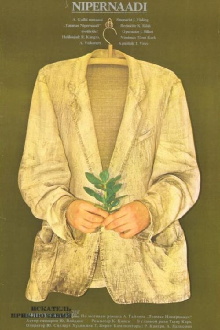
Toomas Nipernaadi is seen roaming the rural landscape, going from village to village looking for the woman of his dreams. He wears a bedraggled white suit but generously pays for any lodging he needs or in one case, even buys a farm. Nipernaadi has a way with words and enchants those he meets with his wild stories about himself. Women find him appealing and the men are entertained as he moves from one locale to the next.
The film is inspired by the Mário de Sá-Carneiro short story, where the narration is made by Professor Antena's assistant who walks by his side when he is run over in a perhaps enigmatic way.
When the 'Lowly Ronin' helps an orphaned teenage girl avoid being turned into a prostitute, she then claims he is her father and they start a farm as father and daughter until fate steps in and he must draw his sword.
Mimosa is about a girl growing up in an orphanage who tries to make life fun for all the residents. It's a great Easter story, an animated fairy tale about a witch kid and what she's up to in the orphanage while the mother witch whips around with her broom.
High school student David Lightman has a talent for hacking. But while trying to hack into a computer system to play unreleased video games, he unwittingly taps into the Department of Defense's war computer and initiates a confrontation of global proportions.
Faithful adaptation of a story by Tomasi di Lampedusa on the encounter between a man and a mermaid, for the television series Ten Italian directors, ten Italian short stories , in which Gianni Amelio, Luigi Comencini, Carlo Lizzani participated among others.
Set in Hamburg's “Hell's Kitchen,” a waterfront milieu of gangsters, pimps, dealers and prostitutes, the story follows the attempts of an ex-seaman first to insinuate himself into the scene, and then to extricate himself from it.
In 1921 the Kwakiut'l people of Alert Bay, British Columbia, held their last secret potlatch. In 1980 at Alert Bay, the U'mista Cultural Centre (U'mista means "something of great value that has come back") opened its doors to receive and house the cultural treasures which were seized decades earlier and only then returned to the people.