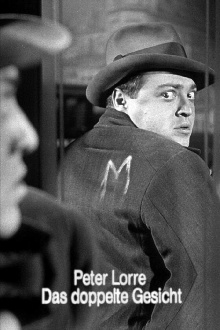
Peter Lorre achieved international fame for his performance in the myth-making role in M. This character has held a peculiar fascination for generations of cinephiles. However, at the time, whilst such success meant recognition, it also weighed on the Hungarian actor as a constrictive burden. Using photographs and film extracts, Das doppelte Gesicht reconstructs the ups and downs of Lorre's career, taking into consideration the economic imperatives and workings of the film industry at the time. (Arnold Hohmann, 1984)
This is not merely another film about cinema history; it is a film about the love of cinema, a journey of discovery through over a century of German film history.
Jonathan Ross delves into the world of James Bond and meets with new and former cast members who reveal humorous stories and anecdotes in a series of interviews.
An examination of why the James Bond films have proved so popular including a discussion between the four actors who have played Bond, an interview with Cubby Broccoli and contributions from the directors, production designers, special effects and stuntmen.
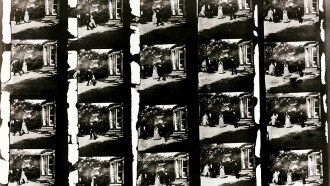
The earliest surviving motion-picture film, and believed to be one of the very first moving images ever created, was shot by Louis Aimé Augustin Le Prince using the LPCCP Type-1 MkII single-lens camera.
This documentary captures the sounds and images of a nearly forgotten era in film history when African American filmmakers and studios created “race movies” exclusively for black audiences.
Released two years after James Dean's death, this documentary chronicles his short life and career via black-and-white still photographs, interviews with the aunt and uncle who raised him, his paternal grandparents, a New York City cabdriver friend, the owner of his favorite Los Angeles restaurant, outtakes from East of Eden, footage of the opening night of Giant, and Dean's ironic PSA for safe driving.
Working men and women leave through the main gate of the Lumière factory in Lyon, France. Filmed on 22 March 1895, it is often referred to as the first real motion picture ever made, although Louis Le Prince's 1888 Roundhay Garden Scene pre-dated it by seven years.
A tribute to the late, great French director Francois Truffaut, this documentary was undoubtedly named after his last movie, Vivement Dimanche!, released in 1983.
An insider's account of Jack Warner, a founding father of the American film industry. This feature length documentary provides the rags to riches story of the man whose studio - Warner Bros - created many of Hollywood's most classic films.
When Francois Truffaut approached Alfred Hitchcock in 1962 with the idea of having a long conversation with him about his work and publishing this in book form, he didn't imagine that more than four years would pass before Le Cinéma selon Hitchcock finally appeared in 1966.
Popular movie trailers from 1984
These some of the most viewed trailers for movies released in 1984:
A cruel hitman nicknamed "Kamikaze" uses all kinds of methods to carry out his jobs. One day he will have to face an old enemy who has an old account pending with him.
While ill and experiencing some difficulty in completing the editing of this film, Brakhage was reading the Marguerite Young novel, "Miss MacIntosh, My Darling.
"Reverse Television" was created in the mid-1980's by video artist Bill Viola. The 30-second portraits were about portraiture and the idea of a person staring at the viewer (as the viewer stares at the TV screen).
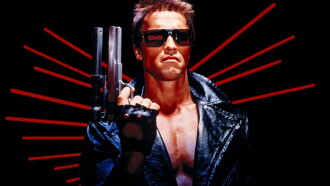
In the post-apocalyptic future, reigning tyrannical supercomputers teleport a cyborg assassin known as the "Terminator" back to 1984 to kill Sarah Connor, whose unborn son is destined to lead insurgents against 21st century mechanical hegemony.
Michał is among the soldiers quartered in a village near Lublin. By accident, he goes to the palace and visits the magnificent building, where he meets a widow Maria.