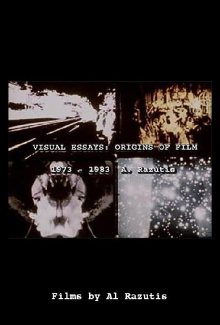
These six essays on film/image history reconstruct cinema history by 're-imagining' its origins, and its poetries, and use historical films themselves (as 'text') to provide the meanings of their creations. Together, these film essays comprise a critical/structural investigation of silent cinema ending with Segei Eisenstein's works (for Stalin) - from Lumiere and Melies through surrealism and horros, to montage and propaganda, we 're-invent' epochs in cinema that became its language and culture.
As the city of Paris and the French people grow in consumer culture, a housewife living in a high-rise apartment with her husband and two children takes to prostitution to help pay the bills.
Penthesilea, the first of six films made by Laura Mulvey and Peter Wollen, traverses thousands of years to look at the image of the Amazonian woman in myth.
Alinur, a student filmmaker, tries to make a film about the apocalypse for his capstone project. The movie itself happens to be about a mercenary named M who inadvertently causes an apocalypse.
A youngster writes a letter to his grandmother about his last trip to Donosti (Spain). This city inspires him to ponder about the language of cinema, time, cities, and sharing memories with our loved ones.
Basically an artist is also a terrorist, the protagonist thinks in an unguarded moment. And if he is a terrorist after all, then he might just as well be one.
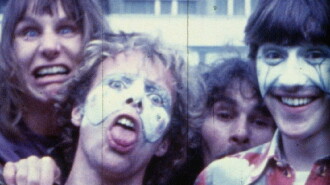
Bern, 1979: a tower block called Tscharnergut. A group of friends get together to make a film about their experiences growing up in suburban Switzerland.
Freely adapted from the eponymous novel, Une vie pour deux is inspired by real events, the discovery by the novelist's husband (director Jean-Pierre Ronfard) of the corpse of a young woman on a beach in Ireland in the late 1970s.
For 'Et les chiens se taisaient' Maldoror adapted a piece of theatre by the poet and politician Aimé Césaire (1913–2008), about a rebel who becomes profoundly aware of his otherness when condemned to death.
Alternative movies trailers for Visual Essays: Origins of Film
More movie trailers, teasers, and clips from Visual Essays: Origins of Film:
Storming the Winter Palace ('Visual Essays: Origins of Film') - a film by Al Razutis
Storming the Winter Palace - a film by Al Razutis 1984 - 1 min. excerpt - part of Visual Essays: Origins of Film by Razutis (6 film series). Poetic interpretation of ...
Popular movie trailers from 1984
These some of the most viewed trailers for movies released in 1984:
Lou Reed and band (featuring guitar legend, Robert Quine) filmed in concert at Palacio de Municipal, Barcelona, Spain on December 10, 1984 during the New Sensations Tour.
Coast Zone […] explores the use of deep-focus, contrasting background figures (often in motion) with those in the foreground (sometimes in extreme close-up).
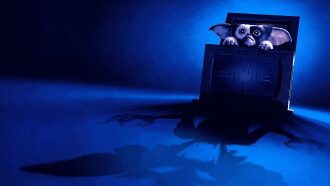
After receiving an exotic small animal as a Christmas gift, a young man inadvertently breaks three important rules concerning his new pet, which unleashes a horde of malevolently mischievous creatures on a small town.
A cruel hitman nicknamed "Kamikaze" uses all kinds of methods to carry out his jobs. One day he will have to face an old enemy who has an old account pending with him.
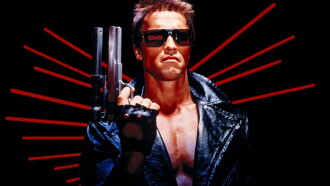
In the post-apocalyptic future, reigning tyrannical supercomputers teleport a cyborg assassin known as the "Terminator" back to 1984 to kill Sarah Connor, whose unborn son is destined to lead insurgents against 21st century mechanical hegemony.
While ill and experiencing some difficulty in completing the editing of this film, Brakhage was reading the Marguerite Young novel, "Miss MacIntosh, My Darling.