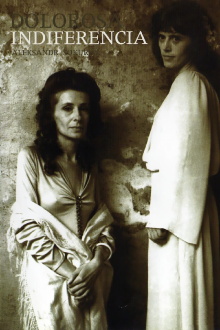
The action in this lavishly produced film takes place at an oddly ark-shaped mansion during World War I, and in spirit (although not in story) it reflects the play which inspired it, the ferociously antiwar Heartbreak House by George Bernard Shaw. A large group of family and friends have gathered at this country house to dance, drink, and converse. Their conversation, in particular, is adorned with erudite literary references and quotations. Despite their apparent refinement, their preoccupations are simple: sex and violence. Disquieting images break the tranquility of the vacationers' inappropriate idyll: some of these include documentary footage of starving African children, images (both real and re-enacted) of George Bernard Shaw going about his daily life, and a corpse coming to life on an autopsy table, only to cheapen that miracle by scolding a group of women. The music used in the film ironically points to its disturbing message and is uniformly anachronistic.
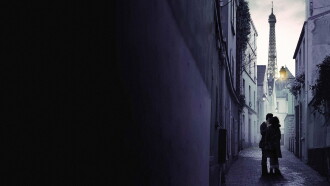
Olivier Assayas, Gus Van Sant, Wes Craven and Alfonso Cuaron are among the 20 distinguished directors who contribute to this collection of 18 stories, each exploring a different aspect of Parisian life.
A disgraced basketball coach is given the chance to coach Los Amigos, a team of players who are intellectually disabled, and soon realizes they just might have what it takes to make it to the national championships.
Love doesn’t break all at once. Nine standalone stories catch it in the moment of fracture, from a bedroom argument to cross-border espionage, from quiet grief to genre worlds, and in the long, stubborn work of finding our way back.
The Drummer and the Keeper tells the story of the unlikely friendship formed between two young men: Gabriel, a reckless young drummer who revels in rejecting society’s rules and Christopher, a 17-year-old with Asperger’s Syndrome, who yearns to fit in.
Eight years after the devastating tsunami, the wounds it left in Japan have still not healed. In her touching search for answers, Haru sets out on a long, eventful journey to her home town, where she lost her family in the flood.
Yamashita Takako works in the food section of a department store. She pays frequent visits to a reputable local Chinese restaurant about opening an in-store branch.
Alternative movies trailers for Mournful Unconcern
More movie trailers, teasers, and clips from Mournful Unconcern:
Mournful Unconcern
playing here
Popular movie trailers from 1987
These some of the most viewed trailers for movies released in 1987:
A made-for-cable-TV docudrama about the trial of the men accused of conspiring to cause protesters to riot at the 1968 Democratic National Convention in Chicago.
After a defecting Russian general reveals a plot to assassinate foreign spies, James Bond is assigned a secret mission to dispatch the new head of the KGB to prevent an escalation of tensions between the Soviet Union and the West.
In a soon to be demolished block of apartments, the residents resist the criminal methods used to force them to leave so a greedy tycoon can build his new skyscraper.
In a violent, near-apocalyptic Detroit, evil corporation Omni Consumer Products wins a contract from the city government to privatize the police force.
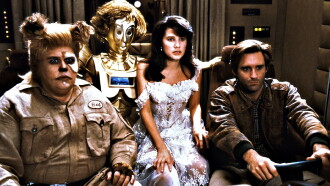
When the nefarious Dark Helmet hatches a plan to snatch Princess Vespa and steal her planet's air, space-bum-for-hire Lone Starr and his clueless sidekick fly to the rescue.
Andy’s friends confront both their own mortality and the deadly new disease stalking their community, while his conservative family grapples with never having come to terms with his sexuality.