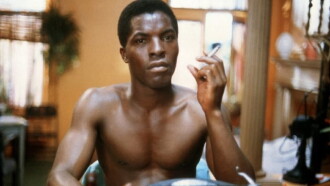
A fictional letter from a daughter, Olivia, to her mother in Dominica is the narrative thread connecting interviews from (predominantly) black and Asian cultural critics, historians and journalists. The choice of occupation for the daughter, a researcher, perhaps strains the narrative conceit too far. Nevertheless, for an avowedly political documentary the result is absorbing.
Between two Thanksgivings, Hannah's husband falls in love with her sister Lee, while her hypochondriac ex-husband rekindles his relationship with her sister Holly.
Arata Isozaki: Early Work in Japan takes a detailed look at the architect's pieces, exploring applauded projects such as the EXPO '70 Osaka Festival Plaza, Gunma Prefectural Museum of Modern Art and Kitakyushu Municipal Library.
Chambord, the most impressive castle in the Loire Valley, in France, a truly Renaissance treasure, has always been an enigma to generations of historians.
A film essay contrasting the modern metropolis with its "golden age" from 1830-1930, with the participation of some of New York's leading political and cultural figures.
Founded in 1919 by Walter Gropius, Bauhaus was supposed to unite sculpture, painting, design and architecture into a single combined constructive discipline.
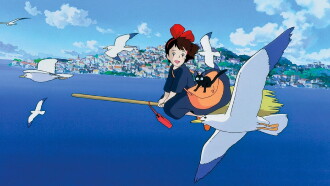
A young witch, on her mandatory year of independent life, finds fitting into a new community difficult while she supports herself by running an air courier service.
This colorful adventure tells the story of an impetuous mermaid princess named Ariel who falls in love with the very human Prince Eric and puts everything on the line for the chance to be with him.
When Sunderdas is murdered, before dying he accuses Dindayal. As a result Dindayal is arrested, prosecuted in Court by Shakuntala Devi, found guilty and sentenced to prison for life.