An analysis of the 54 paintings in the Water Lilies series, begun by Monet in 1895 and continued until his death in 1926. A meticulous study of their structure shows that the apparent spontaneity of these works is in fact the result of highly complex labor. The concept of the series, redefined by Monet, would go on to influence all of modern art.
Throughout the 19th century, imaginative and visionary artists and inventors brought about the advent of a new look, absolutely modern and truly cinematographic, long before the revolutionary invention of the Lumière brothers and the arrival of December 28, 1895, the historic day on which the first cinema performance took place.
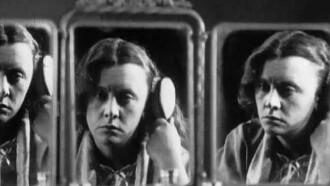
The good guys win out in this sweet tale about a young orphan who is abused for much of her life but who eventually finds happiness when she marries an honest man who extricates her from her situation.
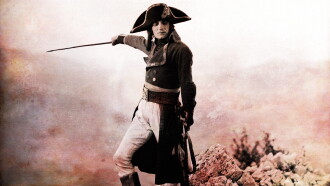
A biopic of former Emperor of France, Napoleon Bonaparte, tracing the Corsican's career from his schooldays (where a snowball fight is staged like a military campaign) to his flight from Corsica, through the French Revolution (where a real storm is intercut with a political storm) and the Terror, culminating in his triumphant 1797 invasion of Italy.
A journey through the masterpieces and obsessions of the Genius of the Impressionism, down the River Seine, from Le Havre to Paris and then up the river towards Argenteuil, Poissy, Vétheuil, Giverny – ending in Paris.
Dreams of Giverny is a modern day ghost story told through the art of classical ballet and set in the gardens of Impressionist painter Claude Monet in Giverny, France.
Cameras follow Irish solo sailor Tom Dolan as he attempts to sail single-handed around the island of Ireland, which is one of the toughest feats in sailing.
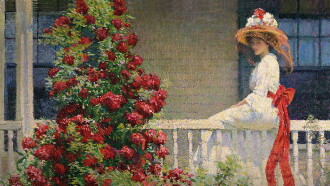
Taking its lead from French artists like Renoir and Monet, the American impressionist movement followed its own path which over a forty-year period reveals as much about America as a nation as it does about its art as a creative power-house.
Monet, Cezanne, Degas, Renoir: some of the world’s most popular artists. Their works, and that of their contemporaries, fetch tens of millions of dollars around the globe.
This half-hour BBC documentary offers a revealing look at Svankmajer at work on "Death of Stalinism in Bohemia," and uses excerpts from his earlier films to trace the development of his unique sensibility.
On a West German Autobahn, Robert plummets from a bridge and is hospitalized. As he recovers, he flashes back to a Bulgarian holiday where he met Jutta and her uncle Lothar, who’d ordered a West German passport to smuggle her out of the DDR.
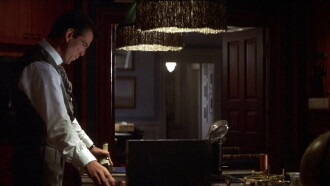
On the fifteenth anniversary of the exorcism that claimed Father Damien Karras' life, Police Lieutenant Kinderman's world is once again shattered when a boy is found decapitated and savagely crucified.
Lucia (Natassja Kinski) is a volatile, exciteable young woman. She forms a romance with Carlo (Stefano Dionisi), who is somewhat callow and is very skittish.
As he gradually turns mad, the dancer Nijinsky evokes the important episodes of his life. In costumes and sets of lush beauty, the divine puppet performs in a final show where the secondary characters are named: Diaghilev, Isadora Duncan, Stravinsky, Auguste Rodin, Léon Bakst.
Comments
Have you watched La couleur de l'instant: La série des bassins aux nymphéas yet? What did you think about it?