The protagonist is a young man staying in a city. He is sensitive, melancholy and a dreamer. He is unable to communicate his feelings to the woman he loves. Everything seems to have been entangled in a mesh, irrespective of these characters. He cannot even differentiate between his capability to love and his passionate desires which have been repressed. That is how he is confused and with his ideals and morality he is living outside his own time and inevitably suffering. His self criticism is endless. He dreams about whatever he lacks and about his ideals. The dreams have led him to the domain of non-communication. His repressed passion along with his self criticism has made him bored with life. Now at every point he expects something exceptional.
Sudhir - staying in a city without family roots - symbolizes the need for commitment in all young, sensitive and thinking individuals all over the world.
Shama and Ravi are members of a Marxist party. Shama loves classical Indian music, a luxury of a few, and Ravi is in love with quotations and the philosophy of Marx - a need of the masses.
A man (psychopath), walking around isolated roads at night, encounters a woman who triggers off his childhood memories of torturing and killing a rat, and further leads him to slash another woman - a hooker to death.
In modern society, communication between individuals is becoming more and more difficult. Two persons may be in the same physical environment, yet it seems that a Glass Pane - invisible but strong, and very much there separates these individuals.
The journey of news coming alive, when an athlete featured on the front page falls in love with a tennis starlet featured on the last page of a newspaper.
Maya is a teenager young girl who is working as a housemaid in a rich family. She is required to do all household work and also look after a small child.
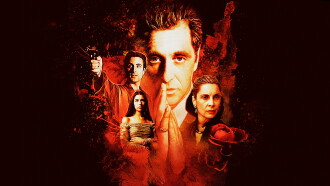
In the midst of trying to legitimize his business dealings in 1979 New York and Italy, aging mafia don, Michael Corleone seeks forgiveness for his sins while taking a young protege under his wing.
Clarence Flamer hosts a late-night talk show on regional radio station North Star Sound. A phone call he takes one night leads to his discovering a mortgage scam being run by a group of estate agents.
With his nephews and niece, everyone's favorite rich uncle, Scrooge McDuck, treks from his mansion home in Duckburg in search of the long-lost loot of the thief Collie Baba.
A heartfelt story about the borderlands of childhood, about a boy who is still a child, but who is touched by an inexplicable, barely discernible feeling of love.
The secretive realm of the world's deadliest ninja warriors is thrown into chaos as one by one, ninja clan leaders are brutally assassinated! What fiendish foe has the power to kill the most dangerous men in the world? To avenge their dead leader, three ninjas must face this hidden enemy.
This half-hour BBC documentary offers a revealing look at Svankmajer at work on "Death of Stalinism in Bohemia," and uses excerpts from his earlier films to trace the development of his unique sensibility.
Andreas, who is ten, has been brought up by his grandmother. When she dies, he removes a putto from the crucifix placed upon her, puts it in his mouth and does not speak again.
The true story of Henry Hill, a half-Irish, half-Sicilian Brooklyn kid who is adopted by neighbourhood gangsters at an early age and climbs the ranks of a Mafia family under the guidance of Jimmy Conway.
Val McKee and Earl Bassett are in a fight for their lives when they discover that their desolate town has been infested with gigantic, man-eating creatures that live below the ground.