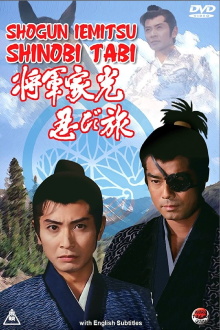
Shogun Iemitsu Shinobi Tabi was a pair of television jidaigeki series on TV Asahi in Japan. The first aired in 1990–1991 and the sequel in 1992–1993. Kunihiko Mitamura portrayed Tokugawa Iemitsu in both series. The show premiered on October 13, 1990, as an off-season replacement for the popular Abarenbo Shogun. It shared several cast members with Abarenbo Shogun, including Reiko Takashima, Ayako Tanaka and some minor guest actors. The final episode aired on March 30, 1991. The sequel ran during the same months of 1992–1993.
This tribute to Myrna Loy is organized chronologically with a few photographs, many film clips, a handful of personal appearances, and a detailed commentary delivered on camera by Kathleen Turner.
"I have not been very active as a social filmmaker anymore after the revolution, though I had great plans and projects at the start of the revolution! So far I have made many so-called commissioned industrial films for national oil, gas, and steel companies as well as for government ministries, in which I tried to bring the films as close as possible to my taste and to my way of thinking and make the films' sponsors to see the world from content and formal viewpoints.
On a West German Autobahn, Robert plummets from a bridge and is hospitalized. As he recovers, he flashes back to a Bulgarian holiday where he met Jutta and her uncle Lothar, who’d ordered a West German passport to smuggle her out of the DDR.
As he gradually turns mad, the dancer Nijinsky evokes the important episodes of his life. In costumes and sets of lush beauty, the divine puppet performs in a final show where the secondary characters are named: Diaghilev, Isadora Duncan, Stravinsky, Auguste Rodin, Léon Bakst.
The secretive realm of the world's deadliest ninja warriors is thrown into chaos as one by one, ninja clan leaders are brutally assassinated! What fiendish foe has the power to kill the most dangerous men in the world? To avenge their dead leader, three ninjas must face this hidden enemy.
The boisterous good humor of Jurmala, the nickel-mine owner, is, if anything, only barely dented by the raging battles in Finland before, during and after World War Two.