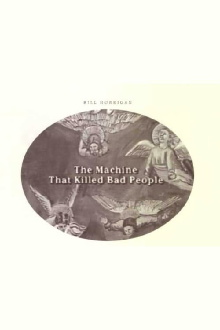
The Machine That Killed Bad People is about the cultural and political history of the Philippines leading up to the overthrow of President Ferdinand Marcos in 1986. It also addresses the role of electronic media in the struggle for power, and more broadly, American intervention in the Third World. Using a structure that emulates the way television news programs construct meaning through fragmentation, the tape interweaves clips of Filipino activists and reporters, a fictional television anchorwoman and correspondent, commentary by independent filmmaker Trinh T. Minh-ha, Fagin's off-camera voice and script, and anonymous excerpts from commercial television.
A whirlwind of improvisation combines the images of animator Pierre Hébert with the avant-garde sound of techno whiz Bob Ostertag in this singular multimedia experience, a hybrid of live animation and performance art.
After concluding the now-legendary public access TV series, The Pain Factory, Michael Nine embarked on a new and more subversive public access endeavor: a collaboration with Scott Arford called Fuck TV.
Jim Moir (aka Vic Reeves) explores Video Art, revealing how different generations ‘hacked’ the tools of television to pioneer new ways of creating art that can be beautiful, bewildering and wildly experimental.
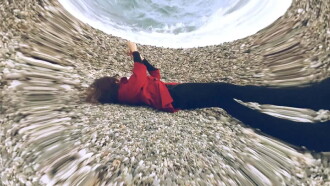
The Karikpo masquerade - a traditional dance of the Ogoni tribe - is transposed onto the remnants of a faded oil industry programme in the Niger delta.
A dream where obsession for German as a second language mixes up with an obsession for neatness and cleanliness as a distinctive feature of the national culture in question seen from the perspective of a foreigner.
One of Paik’s most overtly political and poignant statements, Guadalcanal Requiem is a performance/documentary collage that confronts history, time, cultural memory and mythology on the site of one of World War II’s most devastating battles.
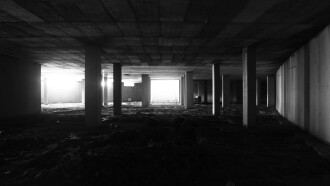
A ritual of grids, reflections and chasms; a complete state of entropy; a space that devours itself; a vertigo that destroys the gravity of the Earth; a trap that captures us inside the voids of the screen of light: «That blank arena wherein converge at once the hundred spaces» (Hollis Frampton).
Originally produced anonymously and distributed by RTMark, Untitled #29.95 tells the story of the commercial art establishment's attempt to turn video art into a precious commodified object through the release of limited editions during the nineties.
Popular movie trailers from 1990
These some of the most viewed trailers for movies released in 1990:
Vivian is a carefree, streetwise diamond in the rough when she meets sophisticated billionaire Edward in a chance encounter that turns into a week-long business arrangement.
Ref'at is a judge who is ruling on an important case that witnesses a lot of security interference. Rafiq Al-Henawy has him killed and stages it as a suicide before the ruling.
Chucky is reconstructed by a toy factory to dispel the negative publicity surrounding the doll, and tracks young Andy Barclay to a foster home where the chase begins again.
Young people living in Poland in the late 1960s had to face difficult times and make tough choices. Some of them were forced to leave their country for having Jewish origin.
When a beautiful country girl leaves her farm and baby behind to pursue a singing career in Nashville, her naïve dreams of stardom descend into a perverse nightmare.