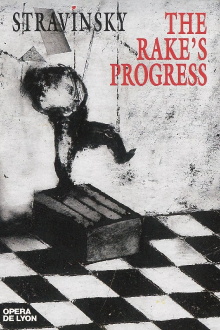
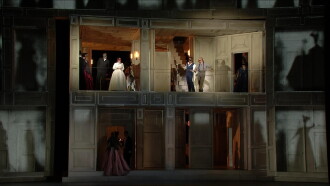
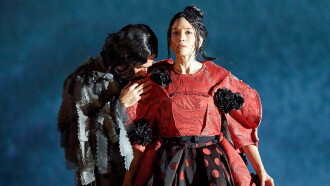
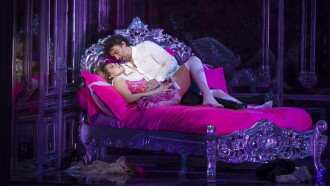
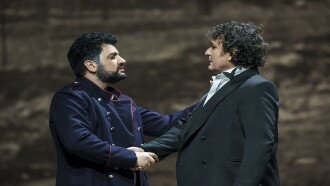
The Rake's Progress is an English-language opera from 1951 in three acts and an epilogue by Igor Stravinsky. The libretto, written by W. H. Auden and Chester Kallman, is based loosely on the eight paintings and engravings A Rake's Progress (1733–1735) of William Hogarth, which Stravinsky had seen on 2 May 1947, in a Chicago exhibition. Filmed in Aix-en-Provence, 1992.
Bregenzs Tales of Hoffmann is different from everything you saw before. The New York Times praised the thoughtfulness and creativity of Stefan Herheims new production, devised by the director as a search for ones own self in a sparkling drag show.
La Rondine (The Swallow) is possibly the least performed of Giacomo Puccinis later operas, but is still just as much a masterwork as its more performed counterparts.
Stephen Wadsworth’s production of Mussorgsky’s epic masterpiece brilliantly captures the suffering and ambition of the Russian people at a critical time in their nation’s history.
France, 1792. Chenier is an idealistic poet, in love with the aristocratic Maddalena. While Chenier supports such notions as "liberte, fraternite egalite," his sympathies do not extend to the current Reign of Terror.
Olga Neuwirth, for a long time one of the great composers of the present, succeeds with this opera in creating a captivating arc across many musical genres.
Ramses is a "life organs" smugler and a millionaire. He wishes to have the tower of Babel rebuilt and hires a detective to find the architect who disappeared with the original plans.
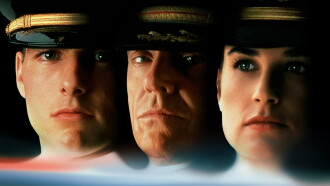
When cocky military lawyer Lt. Daniel Kaffee and his co-counsel, Lt. Cmdr. JoAnne Galloway, are assigned to a murder case, they uncover a hazing ritual that could implicate high-ranking officials such as shady Col.
Linnea in Monet's Garden is a unique blend of imagination and education, teaching children about the art and life of one of the most important painters of the 20th century, while entertaining them with the mystery and beauty of art and nature.
Charlie Simms is a student at a private preparatory school who comes from a poor family. To earn the money for his flight home to Gresham, Oregon for Christmas, Charlie takes a job over Thanksgiving looking after retired U.
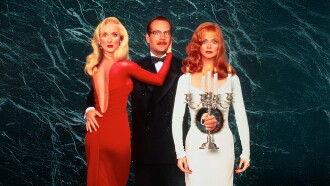
Madeline is married to Ernest, who was once her arch-rival Helen's fiancé. After recovering from a mental breakdown, Helen vows to kill Madeline and steal back Ernest.
Comments
Have you watched Stravinsky: The Rake’s Progress yet? What did you think about it?