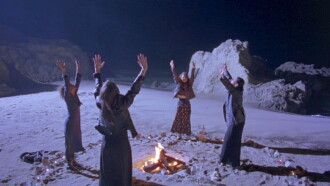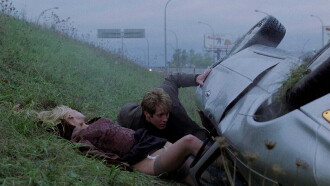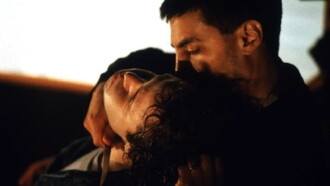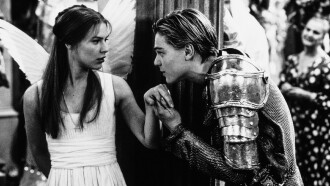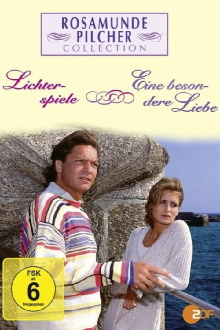
Emma returns home to Cornwall to her father, Ben Litton, a successful albeit rather self-centered painter. Emma is reluctant to be welcomed by her father and will leave her there for a week after her arrival. So Emma remains lonely again until Robert, the gallery owner, wins her heart.
Teenager, Clare Steves, is kidnapped by an old boyfriend, Eddie Spencer, who demands $250,000. The ransom is paid and Clare is released, but when the kidnapers are caught, they claim that the whole scheme was Clare's idea as a way to punish her father.
Set on May 18, 1993—the day on which Denmark voted to join the European Union, just a few months after they'd voted not to do so—the film follows eight or so disparate Danes (an escaped mental patient, a newly-famous singer, a business executive, and their assorted families and cohorts) as they unwittingly alter one another's lives, for better and for worse.
A family, trying to pull themselves together after losing their infant son, moves into a new home, where, almost immediately, the mother begins experiencing paranormal phenomena.
BEAUTIFUL FUNERALS is a hand-painted double-step-printed film composed of 1) dense blackness variously punctuated by brilliantly colored jewel/flower-like shapes AND 2) interruptive white sections which are fuzzily dotted with blurred whites and criss-crossed by black "brushstrokes" and hard-edge straight black and white lines.
Director Mohsen Makhmalbaf claims to have never seen a movie before making his first film. Doubtful as it sounds, this boast matches perfectly with the controversial artist's personae.
The true story of a Prussian aristocrat working for German military intelligence during World War II, who, with a group of fellow devout Christians, plotted to assassinate Hitler with a bomb in his briefcase.
Comments
Have you watched Rosamunde Pilcher: Lichterspiele yet? What did you think about it?