"Surviving Memory" is a film about the role of loss in the formation of identity. It is a narrative intercut with documentary fragments of political actions, which connect the various characters to event through collective memory. Through autobiographical spoken texts, the narrator relays fragments of a relationship between two Jewish women.
Filmmaker Ernesto Rimoch looks at the potent combination of love and ambition in this film about a couple who's so happy their daughter is marrying into a rich clan that they throw the best wedding ever, even if they can't afford it.
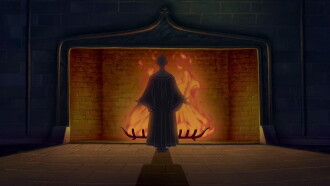
Isolated in the bell tower of Notre Dame, Quasimodo longs to experience the world beyond the cathedral walls, despite the wishes of his stern guardian, the Judge of Paris Claude Frollo.
BEAUTIFUL FUNERALS is a hand-painted double-step-printed film composed of 1) dense blackness variously punctuated by brilliantly colored jewel/flower-like shapes AND 2) interruptive white sections which are fuzzily dotted with blurred whites and criss-crossed by black "brushstrokes" and hard-edge straight black and white lines.
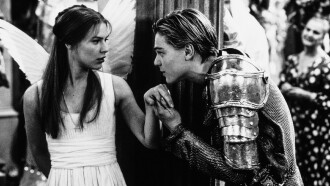
In this contemporary take on William Shakespeare's classic tragedy, the Montagues and Capulets have moved their ongoing feud to the sweltering suburb of Verona Beach, where Romeo and Juliet fall in love and secretly wed.
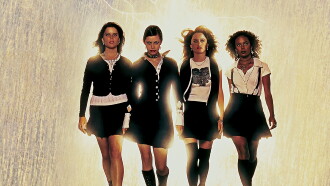
A Catholic school newcomer falls in with a clique of teen witches who wield their powers against all who dare to cross them -- be they teachers, rivals or meddlesome parents.
A young man makes ends meet by selling camotes in his small providence town, has zero luck getting with the ladies, and is too broke to afford the hookers of the town.
A doctor and his wife move to a new city where they plan to start a new life. However, trouble strikes in the form of a police inspector who gets completely obsessed with the doctor's wife.